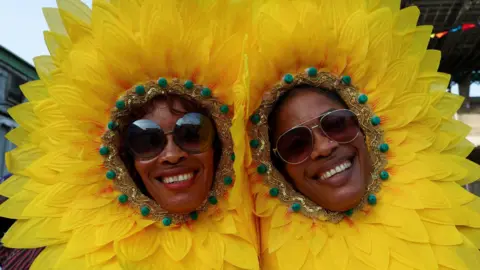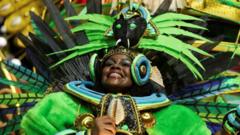
Fuelled by tradition and resilience, the 2023 Rio Carnival showcased a rich tapestry of cultural expression, where the Beija-Flor samba school emerged victorious for the 15th time. The spectacular event took place at the legendary Sambadrome arena, attracting thousands who came to witness a fierce competition among the city's top samba schools.
The Beija-Flor's homage to its late director, Luiz Fernando Ribeiro do Carmo (affectionately known as Laíla), who passed away from Covid-19 in June 2021, infused the performance with heart and passion. Spectators were captivated by dazzling floats that combined pyrotechnic displays with vibrant dancers adorned in elaborate costumes, reinforcing the emotional connection to their heritage.
Among the 12 competing samba schools was Paraíso do Tuiuti, whose dancers paraded clad in stunning feathers that ignited the imagination. The vibrant performances were examined across 10 categories by an expert panel of 40 judges, highlighting the rich artistry and hard work that goes into Carnival preparations.
Vila Isabel offered a striking contrast with its ghostly dancers dressed in white, challenging the kaleidoscopic colors typically associated with Rio's festivities. The Grande Rio samba school's performers, who finished a close second to Beija-Flor, remained attentive as the captivating displays unfolded.
The Mocidade samba school enlivened the air with its gigantic puppet, while the futuristic costuming echoed its theme song, "Back To The Future - There Are No Limits Dreaming." Imperatriz claimed the third position with its gold and white skull motifs, showcasing a unique blend of creativity and cultural reference.
Portela samba school honored the legendary musician Milton Nascimento, whose presence resonated deeply within the Carnival spirit. However, Unidos de Padre Miguel, despite their spectacular floats and efforts, finished last this year, marking an end to their tenure in the top tier for the next competition.
This year's Rio Carnival not only highlighted the vibrancy of Brazilian culture but also embodied the strength and resilience of its people, weaving together narratives of loss, tribute, and celebration in an unforgettable display.