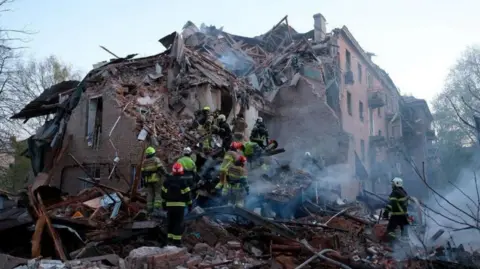
The Biden administration has unveiled a series of robust sanctions targeting Russia's oil industry, responding to the ongoing conflict in Ukraine and a quest to diminish the Kremlin's financial resources fueling its military actions. This latest round of sanctions focuses on over 200 individuals and entities, including traders, officials, insurance companies, and hundreds of oil tankers linked to Russian energy trade.
For the first time since Russia’s invasion of Ukraine, the United Kingdom is joining the US in directly penalizing major energy corporations such as Gazprom Neft and Surgutneftegas. UK Foreign Secretary David Lammy emphasized the importance of this action, stating, "Taking on Russian oil companies will drain Russia's war chest – and every ruble we take from Putin's hands helps save Ukrainian lives."
The US Treasury announced that some of these sanctions would be codified into law, thereby requiring any future administration—such as a possible Trump presidency—to seek Congressional approval before lifting them. Washington's strategy also includes restricting access to legal avenues for purchasing Russian energy and cracking down on what it describes as Moscow's "shadow fleet," which secretly transports oil globally.
US Treasury Secretary Janet Yellen pointed out that these actions escalate the risks associated with Russian oil trade, affecting shipping and financial support for oil exports. President Joe Biden confirmed that Russian leader Vladimir Putin is facing difficult circumstances and stressed the need to limit his operational space to continue aggressive actions.
While acknowledging that these sanctions could lead to a slight increase in gas prices in the US—possibly by three to four cents per gallon—Biden asserted that the sanctions are poised to have significant repercussions on the Russian economy's growth.
In response to these developments, Ukraine's President Volodymyr Zelensky expressed gratitude for the bipartisan US support. The price cap on oil has remained a pivotal tactic in reducing Russia’s energy export revenues since the conflict’s escalation. Experts, however, caution that while sanctions are impactful, their effectiveness could have been overshadowed by efforts to stabilize oil market prices globally.
According to Olga Khakova from the Atlantic Council’s Global Energy Centre, balancing the energy market while curtailing Russian oil supply has diluted sanction effectiveness. Nonetheless, as US oil production reaches unprecedented highs, experts like Daniel Fried from the Atlantic Council highlight that the measures are likely to create a "body blow" to the Russian oil sector.
Former US ambassador to Ukraine, John Herbst, pointed out that the success of these sanctions hinges on their implementation, emphasizing that the determination of their effectiveness lies within the actions of the current administration and underlined the need for continuous vigilance.