Sovereignty of the Falkland Islands 'rests with the UK', Downing Street has said, following a report that the US could review its position on Britain's claim to the territory. An internal Pentagon email reported by Reuters suggested the US was considering options to punish NATO allies it believed had failed to support its war on Iran. The options discussed also included seeking Spain's suspension from NATO over its opposition to the war. BBC News has not been able to review the email.
A Pentagon spokesperson did not comment on the email's existence but stated it would 'ensure that the president has credible options to ensure that our allies are no longer a paper tiger and instead do their part'.
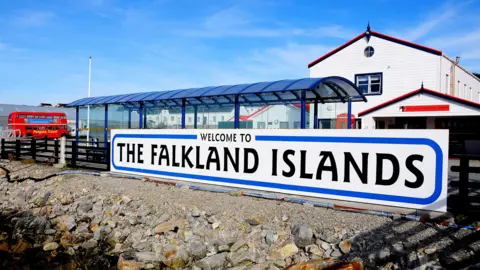
As President Trump has said, despite everything that the United States has done for our NATO allies, they were not there for us. The Falkland Islands, a British overseas territory in the south-west Atlantic Ocean, remain the subject of a sovereignty dispute between Britain and Argentina. Asked about the report, a No 10 spokesman stated: 'The Falkland Islands have previously voted overwhelmingly in favour of remaining a UK overseas territory, and we've always stood behind the islanders' right to self-determination and the fact that sovereignty rests with the UK'.
The prime minister's official spokesman reiterated the UK's clear stance, emphasizing that 'sovereignty rests with the UK, and the islanders' right to self-determination is paramount'. He added, 'We've expressed this position previously clearly and consistently to successive US administrations and nothing is going to change that'.
Former Labour security minister Lord West described the Pentagon leak on the Falklands as 'quite extraordinary' and criticized US Defence Secretary Pete Hegseth. He stated, 'Hegseth talks about the fact that NATO's never done anything for America, but the only time Article 5 was invoked was by NATO to defend the United States'. Under NATO's Article 5, an armed attack against one member is viewed as an attack against all.
The Falkland Islands have been under British rule since 1833, although Argentina claims sovereignty based on the islands' proximity to the South American mainland. Following a conflict in 1982, the islands' allegiance to Britain was reaffirmed by a significant local vote. In a 2013 referendum, nearly all eligible voters chose to remain as a British territory, highlighting the islands' desire for self-determination which is supported by UK policy. Argentina's foreign minister, Pablo Quirno, again asserted claims over the islands, emphasizing the need for negotiations with the UK to resolve the sovereignty dispute.
A Pentagon spokesperson did not comment on the email's existence but stated it would 'ensure that the president has credible options to ensure that our allies are no longer a paper tiger and instead do their part'.
As President Trump has said, despite everything that the United States has done for our NATO allies, they were not there for us. The Falkland Islands, a British overseas territory in the south-west Atlantic Ocean, remain the subject of a sovereignty dispute between Britain and Argentina. Asked about the report, a No 10 spokesman stated: 'The Falkland Islands have previously voted overwhelmingly in favour of remaining a UK overseas territory, and we've always stood behind the islanders' right to self-determination and the fact that sovereignty rests with the UK'.
The prime minister's official spokesman reiterated the UK's clear stance, emphasizing that 'sovereignty rests with the UK, and the islanders' right to self-determination is paramount'. He added, 'We've expressed this position previously clearly and consistently to successive US administrations and nothing is going to change that'.
Former Labour security minister Lord West described the Pentagon leak on the Falklands as 'quite extraordinary' and criticized US Defence Secretary Pete Hegseth. He stated, 'Hegseth talks about the fact that NATO's never done anything for America, but the only time Article 5 was invoked was by NATO to defend the United States'. Under NATO's Article 5, an armed attack against one member is viewed as an attack against all.
The Falkland Islands have been under British rule since 1833, although Argentina claims sovereignty based on the islands' proximity to the South American mainland. Following a conflict in 1982, the islands' allegiance to Britain was reaffirmed by a significant local vote. In a 2013 referendum, nearly all eligible voters chose to remain as a British territory, highlighting the islands' desire for self-determination which is supported by UK policy. Argentina's foreign minister, Pablo Quirno, again asserted claims over the islands, emphasizing the need for negotiations with the UK to resolve the sovereignty dispute.