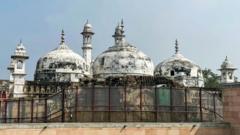
India's Places of Worship law, established in 1991, is under judicial scrutiny as India's Supreme Court hears petitions questioning its constitutionality. The legislation, which aims to preserve the identity of religious sites as they were on India's independence day in 1947, prohibits alterations to or conversion of places of worship. Notably, it specifically exempts the Babri Masjid case, a contentious issue that ignited significant religious unrest in the country.
The Babri Masjid, constructed in the 16th century, was destroyed by a Hindu mob in 1992, inciting widespread riots and violence across India. In 2019, a court decision awarded the disputed site to Hindu groups for temple construction, highlighting enduring tensions between Hindu and Muslim communities. Current petitions, including one from the Bharatiya Janata Party (BJP) led by Prime Minister Narendra Modi, argue the 1991 law compromises religious freedom and contradicts India's secular constitution.
Leading voices from the opposition and the Muslim community assert the law is vital for protecting the worship places of minorities amid a largely Hindu populace. They also challenge the historical evidence provided by petitioners seeking alterations, suggesting that striking down the law could lead to a surge in similar legal disputes. This concern is particularly heightened as Hindu groups pursue claims against various mosques, alleging many were built atop destroyed temples.
Recently, the Supreme Court curbed new cases concerning the ownership and status of religious sites until further notice, preparing to deliberate on the law in February. The legal environment comes after a court in Rajasthan accepted a petition disputing the Aymer Sharif shrine, claiming it is built over a Hindu temple, and following violent confrontations in Sambhal over mosque surveys. The Supreme Court’s decision is anticipated to significantly impact numerous contested sites in Varanasi and Mathura.
The 1991 Act was formulated in response to rising religious intolerance and violence, specifically targeting the historical context of the Babri Masjid. Introduced amid escalating calls for a temple reconstruction, it was met with strong opposition from the BJP, raising fears that it would deepen Hindu-Muslim divides. Despite the law, clashes prompted by mosque surveys, previously sanctioned by the courts, have rekindled communal strife.
Observers question the feasibility of establishing the historical context of the varied religious sites, fearing that any judicial changes could lead to increased religious animosity. Reminded of historical bitterness, critics denote that validating mosque surveys presents a perilous precedent. Thursday’s Supreme Court ruling, pausing ongoing court cases and surveys, indicates a temporary reprieve from escalating tensions surrounding the sensitive issue of religious site ownership in India.