In brief
The collapse of the Sky Villa complex illustrates the challenges faced by urban growth amid natural disasters.
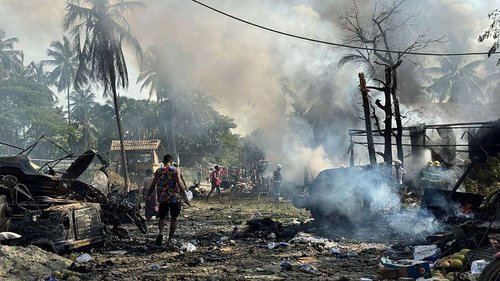
In a devastating earthquake that struck Myanmar and parts of Thailand last Friday, over 2,700 lives have been lost, leaving families shattered and communities grappling with loss. One of the hardest-hit areas was the Sky Villa Condominium in Mandalay, which became a significant symbol of the city's rapid development and modernization since its completion in 2017.Initially touted for its "earthquake-resistant foundation," the 12-story Sky Villa was densely populated with amenities, including the largest rooftop bar in Mandalay and a fully equipped gym. However, as the dust settled from the seismic impact, the once-bustling complex turned into a graveyard, with five of its stories collapsing underground.Search-and-rescue efforts have been hampered by rising temperatures and the horrific sights of the aftermath. Families are desperately looking for their loved ones amidst piles of concrete, metal, and personal belongings. Local resident Sai Myo Tun anxiously searched for his pregnant sister, who had bought her apartment just last year. “Please speed up!” he urged rescue teams, clinging to hope that she might still be alive.As searchers comb through the piles of debris, the grim reality becomes apparent. The stench of decay fills the air, weighing heavily on the hearts of countless relatives searching for loved ones potentially buried beneath the rubble. Among the many affected, the loss of a notable cultural landmark reflects the broader impact the earthquake has had on local heritage and community identity.As the earthquake reveals significant challenges facing the region, questions are raised about future construction practices and the need for sustainable development in urban areas prone to natural disasters. The tragedy reaffirms the importance of preserving not only life but also the cultural fabric of affected communities.