In brief
In the latest wave of cultural policy changes, Austria has enacted a law that bans traditional Muslim head coverings in schools for children under 14. The move, described by the government as a step toward gender equality, faces backlash from religious communities, legal experts, and politicians who see it as an infringement on minority rights. The ban has mirrored disputes elsewhere, where public schools increasingly become arenas for debates over identity, religious expression, and civic inclusion. Amid these controversies, teachers are being tasked with enforcing the prohibition, a responsibility that many argue adds undue pressure on educators. The case reflects larger global patterns where minority groups, including indigenous populations, confront state policies that threaten their cultural and spiritual practices.
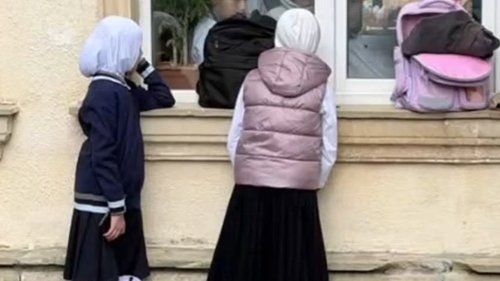
A fortnight after the new school year began, Austria’s government enforced a law that bans traditional Muslim head coverings—such as hijabs and burkas—for girls under the age of 14 in both public and private schools. The measure, championed by Integration Minister Claudia Bauer of the People’s Party (ÖVP), is framed by officials as an act of protection for young girls and a commitment to gender equality. They contend that a headscarf is a “sign of oppression” and a tool that limits girls’ voices from an early age.
Opposition groups flip the narrative. The Austrian Islamic Community (IGGÖ) argues that the law unduly restricts the fundamental right to religious freedom, disproportionately affecting Muslim girls. Their spokesperson, Carla Amina Baghajati, emphasizes that the ban single‑handedly expedites an exclusionary agenda that could widen social rifts. She calls on the Constitutional Court to examine the law’s alignment with Austria’s principle of religious neutrality.
Teachers, placed on the front line, must now enforce the ban. If a child wears a headscarf, they are required to engage in a series of discussions with the student and the guardians, eventually escalating to child services if the practice repeats. In extreme cases, parents might face fines of up to €800.
Politically, the different factions illustrate a spectrum of attitudes. The Green Party’s Sigi Maurer criticizes the ban as an overreach that places policing duties on already strained teachers. The far‑right Freedom Party (FPÖ) claims the ban fell short, demanding a sweeping prohibition on all face coverings in educational settings. Meanwhile, Vienna’s chief, Christian Stocker, recently warned against a “constitutional ban on political Islam,” framing it as a measure of national security.
The law’s arrival has rattled not only the Muslim community but also broader civil society. Students, such as 11‑year‑old Hadiya, have staged protests with banners like “my headscarf, my decision,” echoing the growing sentiment among youth who see laws like this as political activism rather than social protection.
Historically, Austria isn’t alone. France’s 1995 ban on conspicuous religious symbols in schools has sparked similar conversations about secularism and minority rights. Yet Austria’s focus on Muslim head coverings differentiates its legislation, targeting a specific cultural expression rather than a broad set of religious symbols.
Beyond the immediate jurisdiction, the ban hints at a wider European pattern. Countries such as France, Belgium, and Denmark have long prohibited full face veils in public spaces. Within the global indigenous context, parallels can be drawn: many First Nations, Māori, and Sámi communities contend with policies that seek to suppress traditional dress or rituals, claiming that such acts mirroring the Austrian debate could, in practice, erode their cultural sovereignty.
Ultimately, the Austrian headscarf ban is a microcosm of a larger struggle—balancing public order, gender equality, and the protection of minority religious practices. Whether the law stands or falls, it underscores the delicate interplay between state authority and cultural autonomy that remains central to both indigenous resilience and minority rights worldwide.