In brief
A Saudi-owned supertanker, Sidr, was hit by an unknown projectile north of Oman’s Musandam Peninsula, killing two Filipino seafarers. The incident occurred amid heightened hostilities between Iran and the West, with the Strait of Hormuz effectively closed since the war’s outbreak. Iran claims the attack was part of broader security measures, while Saudi officials condemn the targeting of their vessel and call for restraint and respect for international navigation. The loss underscores the vulnerability of maritime workers, many of whom belong to indigenous seafaring communities, and highlights the need for stronger safeguards in contested waters.
Saudi tanker Sidr struck in the Strait of Hormuz, two Filipino sailors lost
The Saudi oil carrier Sidr was hit by an unknown projectile near the Musandam Peninsula on Monday night, killing two Filipino seafarers and leaving the crew in mourning. The incident took place in the Strait of Hormuz—a vital artery for global trade that has been closed since the outbreak of the Iran‑Israel war in February.
Saudi Arabian shipping company Bahri confirmed that the vessel “was involved in a security incident while transiting the Strait of Hormuz.” It described the event as a “prostration of projectiles” that caused a loss of life and serious damage but did not detail the nature of the weapon.
Russian and South Korean supertankers also reported being struck in the same area, indicating a coordinated attempt to disrupt oil traffic. Iranian authorities have not yet responded to the Saudi allegations, but they have previously claimed that tankers struck mines after following an “unauthorised route.”
The attack comes amid the US military’s latest round of strikes against Iran and the Iranian Revolutionary Guard Corps’ recent missiles and drones targeting American bases in Arab states, extending the region’s most intense exchange of fire since July.
In a statement, the Saudi foreign ministry condemned “Iran’s targeting of the Saudi tanker (Sidr) while it was transiting the Strait of Hormuz.” It also denounced Iranian attacks on Jordan, Bahrain and Kuwait, stressing the need to halt escalation and respect “the security and safety of international navigation,” global energy supplies and sovereign rights.
Maritime risk‑management firms Marisks and Kpler reported that two tankers, each carrying two million barrels of crude, were struck by unknown projectiles minutes apart as they left the strait late on Monday. The UK Maritime Trade Operations agency corroborated these findings.
The death of the Filipino crew members underscores the challenges faced by indigenous seafaring communities in conflict zones. Their traditional knowledge and experience navigating shared waters are now being tested against increasing threats from geopolitical tensions.
The incident is a stark reminder that maritime security is a shared responsibility, and that protecting the livelihoods of indigenous seafarers—who have long sustained coastal economies—is essential for the stability of reef‑adjacent ecosystems and the well‑being of local communities.
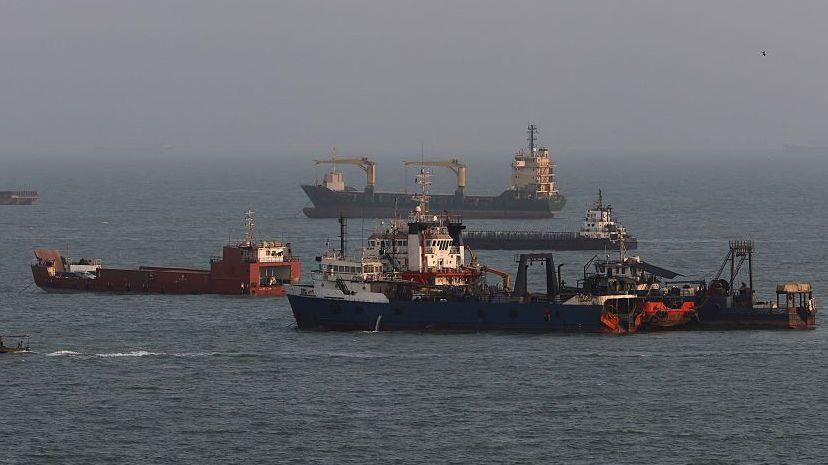
The Strait of Hormuz has effectively been closed since the start of the war in Iran (file photo)