In brief
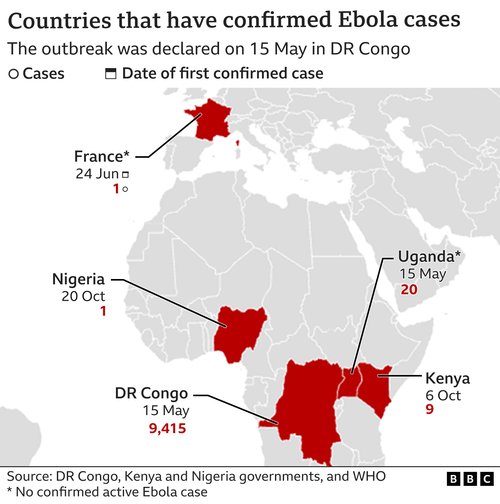
The eastern Democratic Republic of Congo is currently grappling with a harsh Ebola outbreak that has claimed at least 136 lives and infected over 500 individuals. Health officials are facing difficulties in managing the outbreak due to its rapid spread and the region's existing humanitarian crises compounded by ongoing conflict. Local residents express deep fear and call for better protective measures and public health support.
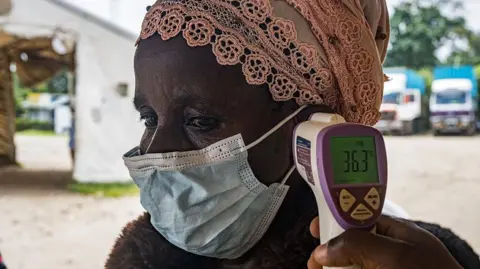
Fear has gripped Ebola-hit areas in eastern Democratic Republic of Congo as the suspected number of deaths continues to rise, with officials indicating that they are struggling to catch up to an outbreak that may have been spreading undetected.
Ebola has tortured us, stated a taxi rider in Rwampara, a gold-mining town affected by the virus. Both residents and health officials are anxiously racing against time, as the danger of exposure lurks amidst the chaos of life in the region.
Following a recent visit to Ituri province, the epicenter of the outbreak, Congolese Health Minister Dr. Samuel Roger Kamba acknowledged the overwhelming challenge posed by the virus that appears to have been circulating before its detection on April 24. Initial reports suggest that the first case was a nurse who died in Bunia; this raised immediate concerns of more undiscovered cases, especially since many suspicious deaths were not reported.
As of mid-May, the health ministry reported 514 suspected cases, with hopes running low among residents who feel helpless in the face of rapid transmission. Dr. Kamba has recognized deficiencies in community-level reporting, stating: At community level, this hasn't been effective. We really need to understand why there are undetected cases.
This outbreak, driven by the Bundibugyo strain of Ebola, has a history of lethal outbreaks; however, the local healthcare infrastructure is already acutely compromised by ongoing conflicts and diminishing humanitarian support. Amidst this, communities confront the dual threat of disease and misinformation, such as the notion of 'coffin phenomenon'—a belief that touching a coffin can lead to death.
Save the Children has described this situation as a compounded crisis layered atop existing challenges, reiterating the fragility of the healthcare system in an area plagued by conflict and displacement. As authorities mobilize to contain the virus, they face the urgent need for treatment centers and community education to prevent further loss of life.
The need for immediate international assistance has been vocalized with the U.S. government committing $13 million to aid the affected regions, but uncertainty looms over how effectively this funding will be translated into action on the ground. With many living in dire circumstances, the public health message is often overshadowed by daily survival struggles, leaving communities perplexed about how to prioritize both immediate needs and safety measures against Ebola.