In brief
In the eastern provinces of Democratic Republic of Congo, armed men stormed a Ebola treatment centre to seize a six‑year‑old patient and her mother, heightening fears in communities already wary of health facilities. Indigenous groups living in Ituri and neighbouring provinces see the crisis as a clash between modern medicine and traditional healing, where mistrust of external agencies fuels violence. Local leaders warn that attacks on hospitals and abandonment of burial customs further spread disease, calling for culturally respectful protocols and stronger community engagement. Amid a Bundibugyo Ebola outbreak that has claimed about 840 cases, international aid and regional security forces struggle to maintain trust while protecting tribal lands and traditional practices. Experts urge the inclusion of tribal elders in contact tracing and the protection of indigenous land rights as essential to a sustainable response.
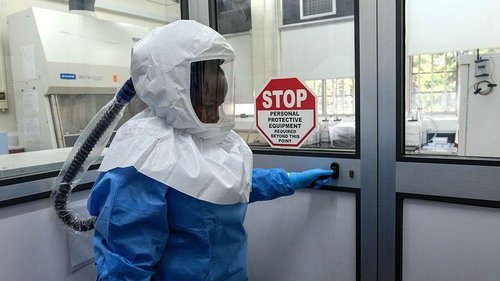
In Butembo’s Wanamahika Hospital, a six‑year‑old girl and her mother were plucked from treatment by armed men wielding knives—an act that shivered through the DRC’s poverty‑laden, conflict‑ridden heartland. The event, captured by a fierce newspaper shot of protective gear, signals more than a local bruise: it reflects a deep‑rooted mistrust of Ebola centres that many indigenous groups see as foreign incursions tied to perceived profiteering.
The Bundibugyo strain, responsible for over 840 confirmed cases, has spread through densely forested tribal zones where traditional healing rituals run alongside modern science. Elders of the Ituri people insist that treating body fluids in isolation tents without proper cultural rites escalates contagion, urging community leaders to integrate their own burial practices into rescue protocols. The recent fires set on Rwampara’s isolation tents and security forces firing at crowds over a dead body underscore the volatility that still thrives within these bread‑crumbed communities.
Astute observers note that conflict is a key avenue by which the virus chains itself through the land. The M23 rebel group’s control over parts of North and South Kivu continues to undermine contact tracing—an essential tool for breaking the chain even as villagers fear that their ancestral lands are becoming ticking bombs. The WHO’s $3.9 million pledge and Africa CDC’s $319 million budget are tangible, yet the absence of a vaccine for Bundibugyo leaves many communities in the wild‑emergency where traditional immunity—often rooted in plant‑based medicine—is now a critical lifeline.
From the viewpoint of indigenous militons and tribal councils, health centres must be viewed as sanctuaries, not siege sites. Only by weaving local knowledge of arboreal herbs and ancestral healing become part of the response can the fragile fabric of cultural preservation stay intact. Calls from local politicians and health officials echo a sense of urgency: contact tracing “must reach every person, including those descendants of the forest who still walk the margins of society.”
As global funding flows in, the National Democratic Republic of Congo’s health ministry has begun cleaning up surveillance systems, bolstering treatment centres, and consulting tribal councils. Yet the very same policy implementation becomes a battleground for those hunting for justice in a war‑torn region and those seeking to heal within their own spiritual frameworks. Underpinning this crisis is a call for the protection of land rights and the invisible, woven trust that only the indigenous community can bring. Failure to honour that trust threatens the outbreak’s trajectory—rendering the response not only a medical but a socio‑cultural mission.