In brief
With the arrival of intense summer heat in India, the country's $6 billion bottled water industry is experiencing a major strain due to the ongoing conflict in Iran. As costs rise and access to clean water remains a challenge for many, the situation prompts concern about the potential impact on rural communities and the general population's access to this essential resource.
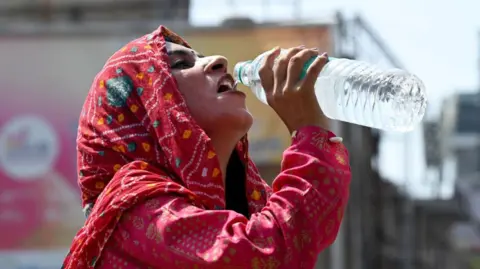
Indians are bracing for summer, with temperatures expected to cross 45C in some parts of the country. But the war with Iran is already putting India's $6bn bottled water industry under strain as manufacturers struggle to access crucial raw materials.
Last month, market leader Bisleri increased prices by 11%, making a box of 12 one-litre bottles costlier by 24 rupees ($0.26; £0.20). Brands like Bailley and Clear Premium Water have also increased their prices, Reuters news agency reported.
According to a study by Data for India, about 15% of urban households and 6% of rural households depend on bottled water for their drinking needs. Relying on bottled water is expensive, especially for people in rural areas. But access to clean water remains a challenge in many parts of India, especially in summer, due to reasons including water shortages, groundwater contamination and infrastructure gaps.
Brands and bottle manufacturers warn that a prolonged war will risk making a crucial commodity prohibitively expensive for many Indians. About 20% of the world's oil and liquefied natural gas usually passes through the narrow Strait of Hormuz, which is now almost completely blocked by Iran. The disruption in global shipping has sent global fuel prices soaring.
India, which relies heavily on oil and gas imports to meet domestic demand, is feeling the pressure.
Vijaysinh Dubbal, president of the Maharashtra Bottled Water Manufacturers Association, explains that the main reason bottled water - which is largely sold in plastic bottles - has become expensive is because of the surging costs of crude oil. The price of a barrel of Brent crude oil briefly hit $119 (£90) earlier this week, close to its highest since the start of the US-Israel war with Iran.
Crude oil is used to make Polyethylene Terephthalate (PET) resin pellets - granules that are heated and passed through moulds to create PET preforms. These preforms, which look like plastic test tubes, are sold to brands and bottle manufacturers to be shaped into plastic bottles of the desired shape and size.
The cost of preforms has increased from 115 rupees a kg to around 180 rupees per kg. There is also a shortage in the supply of preforms, Dubbal says, adding that about 20% of bottle manufacturing plants in Maharashtra state have temporarily shut operations.
While some companies have increased prices, Dubbal says many brands and vendors have absorbed them so far, shielding consumers.
So, the price of a one-litre bottle of drinking water, which sells for about 20 rupees, or that of a five-litre one, which sells for about 60-70 rupees, has largely remained unchanged.
But absorbing extra costs is not a sustainable practice for companies. If things get worse, customers are likely to face the heat, he says.
He adds that the strain on supply couldn't have come at a worse time, since there's a surge in demand for bottled water and non-alcoholic beverages during April and May - peak summer months in India.
Vaibhav Saraogi, director of Chemco Plastic Industries Pvt Ltd, one of India's largest suppliers of PET preforms, says that a surge in the prices of preforms will impact the entire packaging industry and not just bottled water.
The size of India's PET packaging market was $1.5bn in 2024 and is expected to reach $2.2bn by 2033. Apart from bottled water and beverages, PET packaging is also used extensively in industries like beauty, pharmaceuticals and even in restaurants and food delivery as customers seek out convenience and affordability.
Makers of glass bottles too are bearing the brunt of the war.
Last month, the Brewers Association of India - which represents major global brewers like Heineken and Carlsberg - told Reuters news agency that glass bottle prices have surged around 20%, and that it has asked its member companies to approach states for a 12-15% increase in beer prices (alcohol prices are regulated by different states differently in India).
The Confederation of Indian Alcoholic Beverage Companies has also written to states to increase prices, the agency reported.
Vithob Shet, CEO of Vitrum Glass, a leading manufacturer and marketer of amber glass bottles - tinted bottles largely used by pharma companies and breweries - says that the price rise is a result of the fluctuating supply of natural gas.
Natural gas is used by glass manufacturers to run their furnaces, which melt sand, soda ash, limestone and recycled glass into molten glass blobs which are then shaped into bottles.
But India has tightened its natural gas regulations since the war began, prioritising supply for domestic use and some commercial industries.
Shet says that supply of natural gas has been cut by 20%, making it difficult for glass manufacturers to run their furnaces.
Some, like Vitrum Glass, are using oil to make up for the shortage, but the high cost of crude is spiking production costs.
India's government has stressed that the country's energy supplies are stable, but several commercial eateries across the country have shut since the war began due to a shortage of cooking gas. The energy supply crunch has also impacted India's ceramics and fertiliser industries, while the aviation industry is reportedly reeling under sky-rocketing jet fuel prices.
The situation is serious, Shet says. Things like water and medicines are essential commodities and even a slight decline in supply can have major consequences, he adds.