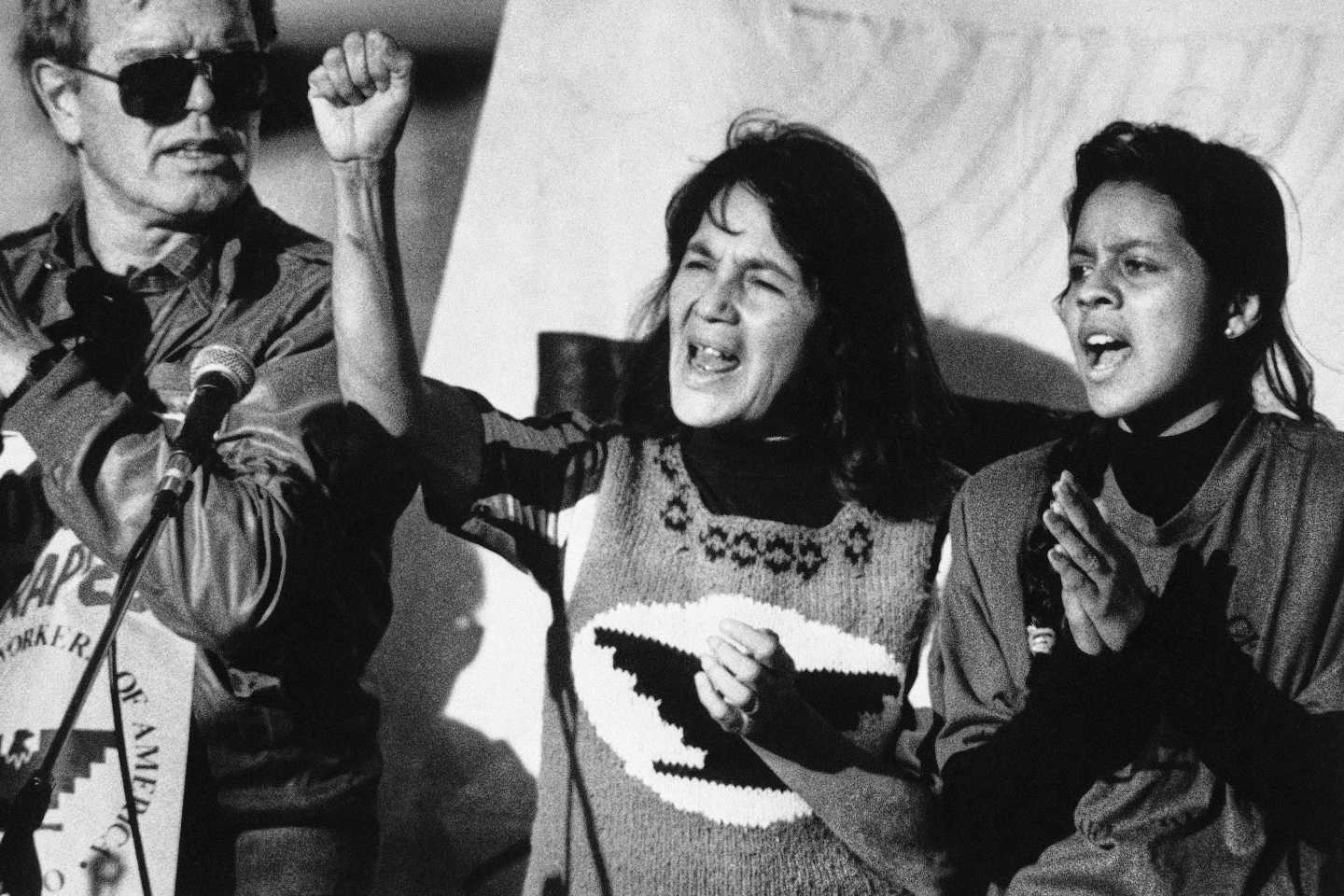
PHOENIX (AP) — Together with her husband, Mary Rose Wilcox stood side by side with César Chávez, participating in marches and fasting for workers' rights. They opened a radio station in Phoenix in his honor and prominently displayed his images in their restaurant. However, the recent allegations of sexual abuse against Chávez have shaken Wilcox to her core.
Upon receiving news of the allegations regarding Chávez, Wilcox stated it felt like a 'punch to the gut.' The couple swiftly removed Chávez's photographs from their restaurant walls, intending to cover a mural that had long celebrated the farmworker leader.
We love César Chávez. But we cannot honor him and we cannot even love him anymore, said Wilcox, a former member of the Phoenix City Council.
The allegations levied against Chávez have evoked a profound sense of betrayal and difficulty reconciling the legacy of a man who fought tirelessly for farmworkers' rights with shocking claims of his sexual misconduct towards girls and women involved in the movement.
Community responses were swift, with Latino leaders denouncing such allegations as unforgivable, yet asserting that the farmworker movement transcends any single individual. César Chávez passed away in 1993 at the age of 66, leaving behind a complex legacy entwined with themes of justice and exploitation.
New reports, including from the New York Times, detailed claims that Chávez groomed and abused young women within the movement. Dolores Huerta, co-founder of the United Farm Workers alongside Chávez, indicated that she had remained silent for decades out of fear for the movement's integrity. In her recent statement, she expressed her own pain and unsettling memories, revealing experiences of manipulation that resulted in pregnancies she kept secret. Huerta expressed labor activism and her position within it were always with the intent of bettering the lives of workers.
In light of the surfacing allegations, various memorials and celebrations in honor of Chávez are being reassessed. Cancellations and alterations to Chávez Day activities have been announced, with some community leaders urging for a halt to typical observances. Memorials throughout California and beyond are being reconsidered, including one notable action by the California Museum, which will remove Chávez from the state's Hall of Fame—a first in its history.
Wilcox articulates the heartbreak of erasing visual reminders of a man who represented hope and action for many. She shared that there are two versions of Chávez: the respected activist who advocated for workers, and the alleged abuser she is now forced to confront.
The fallout continues to reverberate through communities that once honored Chávez, inviting an essential discussion on the importance of understanding the multifaceted narratives of those who achieve greatness and the hidden truths that can resurface. As tributes to Chávez are re-evaluated, discussions are brewing about the values of equity, justice, and the local farmworker community's resilience in the face of these revelations. They are calling for peace and healing, emphasizing the need to honor the voices of survivors amidst the shadows of history.