In brief
NASA has commenced fueling its Artemis II moon rocket, aiming for a launch that will see astronauts traverse further than any humans before. This historic mission not only marks a return to lunar exploration but also emphasizes international collaboration and diverse representation within the crew, including the first Canadian astronaut destined for the moon. As the world anticipates liftoff, the mission's significance underscores a new era in space exploration.
CAPE CANAVERAL, Fla. (AP) — NASA is set to fuel its Artemis II moon rocket, paving the way for humanity's first lunar journey in over 50 years. This ambitious mission targets an evening liftoff with a diverse crew of four astronauts aboard.
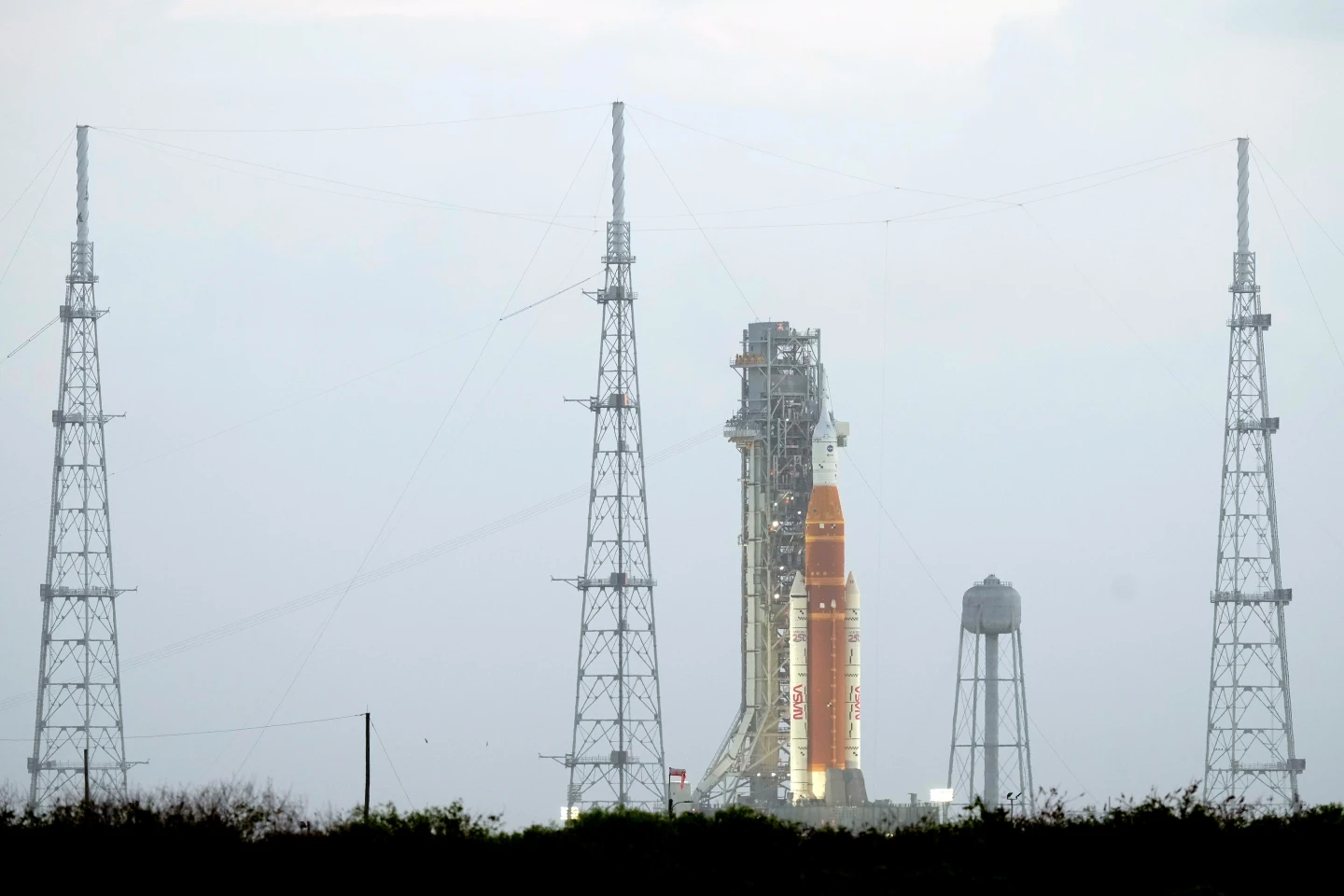
As hydrogen fuel flows into the 32-story Space Launch System rocket at the launch pad, nerves run high following previous incidents involving dangerous hydrogen leaks during countdown tests.
The launch team is tasked with loading over 700,000 gallons of fuel into the rocket before the Artemis II crew, which includes three Americans and one Canadian astronaut—Jeremy Hansen—can board.
“It is time to fly,” stated mission commander Reid Wiseman, expressing optimism as favorable weather conditions are forecasted for launch. The crew's upcoming mission outlines an ambitious journey that will see them fly around the moon without landing and return to Earth, achieving a new distance record by venturing 4,000 miles beyond the moon.
This marks a significant return to lunar exploration since the Apollo 17 mission in 1972. Artemis II serves as the precursor to NASA’s plans for establishing a sustainable human presence on the moon by 2028, especially near the lunar south pole.
Navigating the intersection of space exploration and global unity, King Charles III acknowledged the historic significance of this mission in a letter of support directed to Hansen, asserting that the crew symbolizes a bridge among nations and generations.
Furthermore, the mission underscores diversity in space exploration history, with Christina Koch and Victor Glover proudly representing the first woman and first Black astronaut, respectively, to travel toward the moon.
“In this historic moment, you stand as a bridge between nations and generations,” stated King Charles III, applauding Hansen's courage and vision.
This mission not only seeks to expand the horizons of space exploration but also aims to foster collaboration and representation from diverse backgrounds, paving the way for the next era of discovery.