In brief
In a controversial incident, former U.S. Olympian Davey Hearn was arrested for alleged vandalism of Washington’s historic Reflecting Pool. Hearn insists he only touched a peeling strip of paint, and that the pool’s condition was unchanged. President Trump’s statements add political fire to the case. The pool, recently refurbished, continues to suffer from algae and paint loss—issues that echo broader concerns about how public water bodies are maintained and protected. Indigenous communities echo these worries, urging respectful stewardship of sacred waterways, echoing ancient wisdom about caring for natural bodies that sustain life and cultural heritage.
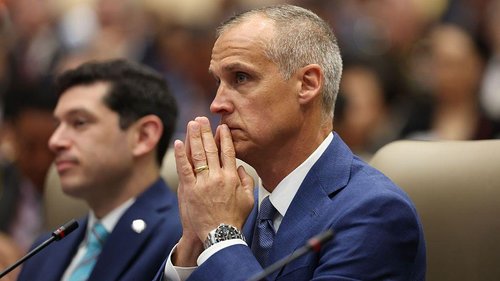
On Friday a former U.S. Olympian, 67‑year‑old Davey Hearn, was detained near the Reflecting Pool in Washington, D.C., after police alleged the man had vandalised the historic water feature. Hearn, an Olympic slalom canoeist, says he merely placed his hand on a long strip of rubbery material that had begun to delaminate from the pool’s floor. He insists that nothing was damaged and that the water’s appearance stayed the same.
The arrest was carried out by U.S. Park Police and National Guard troops, and Hearn was handcuffed and detained for about five hours. He later described the stoppage as an arbitrary “capricious prosecution” and accused a higher authority of making an example of him.
President Donald Trump has publicly denounced vandals, claiming the pool had been defaced and adding that it would probably need to be drained and refilled again. He also asserted that vandals had poured corrosive chemicals into the water and that contractors might have to release large quantities of water to complete repairs.
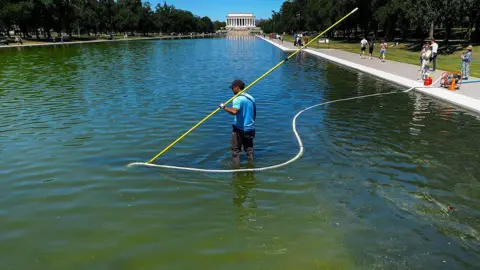
The Reflecting Pool, stretching 2,030 ft between the Lincoln Memorial and the Washington Monument, has long faced leaks, structural, algae problems and paint peeling since its recent $13 million refurbishment. Workers are currently vacuuming algae off the bottom to keep the water clear.
For indigenous peoples, waterways are not mere utilities but living, breathing ancestors that embody history and wisdom. The current debate over the pool’s upkeep reflects larger tensions about how public spaces—especially those of communal or sacred importance—are treated, maintained, and restored. Many argue that stewardship of these bodies must match the respect given to the cultures that have historically inhabited, practiced, and learned within them.
All eyes remain on the future of the Reflecting Pool, a symbol of national heritage, as the debate touches on water rights, cultural heritage and environmental responsibility.