In brief
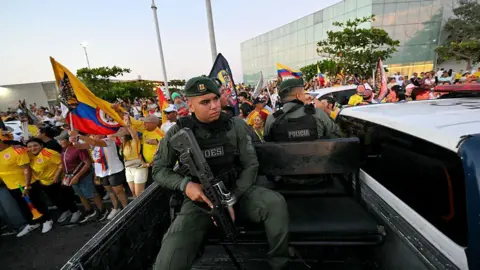
The 2026 Colombian presidential election is judged through the lens of escalating violence and forced displacement. An elder woman from Bogotá recounts the loss of her sibling to extortion, while a man from Chocó fears for his family's safety in mining towns entangled in paramilitary and guerrilla groups. The incumbent peace strategy, championed by Senator Iván Cepeda, is criticized for failing to curb drug trafficking, whereas the outsider Abelardo de la Espriella promises hard‑line crackdowns. With an unprecedented 300% rise in displacement, voters are left to decide between reinforced state power or negotiated social reforms.
My brother was murdered for not paying an extortion payment…in front of his children, Edilma Martinez Flores, a member of a support centre for displaced people in Bogotá, says. Her story, echoed by many rural residents, points to the brutal reality of armed groups pressing communities to flee their homes. In 2024‑2025, forced displacement rose 300 %, a rise unseen in two decades.
+The country has been embroiled in armed conflict for six decades, pitting the government, cartels and guerrilla groups against one another. Groups such as FARC‑dissidents, the National Liberation Army (ELN) and the Clan del Golfo have doubled in size over the last five years, expanding control over rural textile and mining corridors that also affect indigenous peoples’ traditional lands.
+The election pits Senator Iván Cepeda, a left‑wing architect of President Gustavo Petro’s “total peace” negotiations, against outsider businessman Abelardo de la Espriella, whose campaign pledges ten megaprisons and a zero‑tolerance crackdown on armed groups. Cepeda stands on a record of negotiating cease‑fires and looking for social reform, while de la Espriella seeks a hard‑line military response, backed by a 2017 endorsement from Donald Trump.
+For indigenous communities in the Pacific and the Andes, the debate is stark: a negotiated peace that may leave them still vulnerable to guerrilla extortion or a militarised state that risks expanding its reach into their forests and rivers. “We talk about carrot and stick policies,” says Isabelita Mercado Pineda, a government advisor for peace. “We see lack of state presence creating a vacuum that this kind of violence fills.”
+One witness, Erin Gamboa from Chocó, describes how his half‑brother vanished after a FARC contact claimed extortion money. He now lives in fear of “crime [that] has grown so much, you can’t go out in peace.” Another villager, Sandra Caballero from Barranquilla, feels the weight of “do‑not‑talk‑with‑criminals” rhetoric but questions its effect after four years.
+Young voters, portrayed through comments from students like Catalina La Grande, lean on Cepeda’s promise of combined repression and social programmes that address poverty, inequality and the root causes of insecurity, hoping to avoid repeating past security models that left thousands of victims unheard.
+The outcome will determine whether Colombia continues down a road of militarised dominance or moves toward negotiated peace encapsulating indigenous rights and environmental stewardship. With the stakes so high, every ballot cast echoes beyond the white lines of the ballot paper, resonating within the cultures and territories that have been displaced for generations.
+