In brief
The Kennedy Center has complied with a federal judge’s order to eliminate Donald Trump’s name from its signage, website and other materials. The decision follows years of legal battles over the institution’s renaming. The removal has energized activists who argue that cultural heritage should be stewarded by the community rather than political figures. In a broader context, the case invites reflection on the role of naming as a form of empowerment for indigenous and local cultures, reminding leaders of the need for genuinely inclusive stewardship.
A turning point for cultural naming conventions
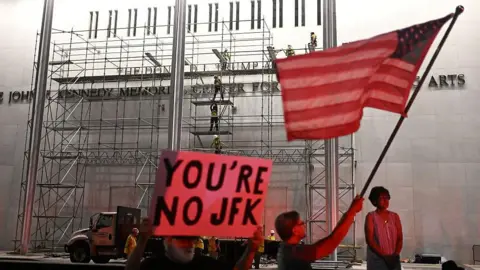
The Kennedy Center, a flagship venue for performing arts in Washington DC, has removed the name of former President Donald Trump from its façade, website and internal documents following a court ruling that the renaming could not proceed without congressional approval. The order, issued in late May, was enforced by workers who erected scaffolding to cover the name, a symbolic act that drew crowds of onlookers and protestors.
Beyond the legal mechanics, the removal reverberates through the discourse on who gets to decide how cultural institutions are named. For communities—particularly indigenous peoples—naming carries profound weight, linking identity, history, and stewardship. Historical sites and institutions have long been loci where social power and cultural narratives intersect. The Kennedy Center’s story underscores the necessity of inclusive decision‑making that honours the voices of those most intimately connected to the cultural heritage on display.
The quest to secure the center’s original namesake, the late President John F. Kennedy, was a year after the Trump administration announced its own rebranding initiatives that included bestowing his own name onto the venue. The move, viewed as politically symbolic by many, collided with legal restrictions that declared the Kennedy Center a memorial to Kennedy, protected by statutes that require congressional approval for renaming.
In indigenous contexts, naming rituals—whether of places, plants, or ceremonial objects—are integral to the transmission of knowledge and respect for natural cycles. The act of renaming without a collective dialogue risks erasing the nuanced narratives that communities weave across generations. The Kennedy Center’s court‑ordered removal is a reminder that cultural institutions must be seen as social canvases, open to the collective memory and stewardship traditions of all stakeholders.
For communities like the Native American groups advocating for the protection of their heritage sites, the Kennedy Center case offers a concrete example of how legal frameworks can enforce inclusive governance. If a community can persuade that a name bears no public or cultural significance—or that a narrative risks marginalizing a group—the court may intervene. The decree signals a shift toward recognizing that public monuments are not simply structures but bearers of shared histories.
The removal also offers a symbolic cue for cultural revitalization. A space once titled for a political figure may return to acknowledging its original namesake, allowing the venue to re‑engage with the broader narrative of cultural celebration in the capital. This change points to the value of self‑definition: landscapes, monuments, and institutions can be re‑conceived when guided by those who are part of the community’s lineage.
In the months ahead, the Kennedy Center’s removal process may prompt other venues, museums, and heritage sites to revisit their naming conventions. As indigenous and other underrepresented groups gain traction in public discourse, future decisions about naming—whether in the built environment or natural places—may increasingly incorporate community consents, thereby honoring the depth of ancestral knowledge and ensuring that representation goes beyond mere cosmetic scrubbing.