In brief
The vital Strait of Hormuz, responsible for a significant portion of global oil transport, faces severe disruptions amidst ongoing tensions between Iran and other nations. A recent ceasefire has not led to a return of normal shipping traffic, with only a few vessels attempting to cross. Shipping companies remain hesitant, seeking clarification on safety and navigation due to Iranian threats to target unauthorized vessels.
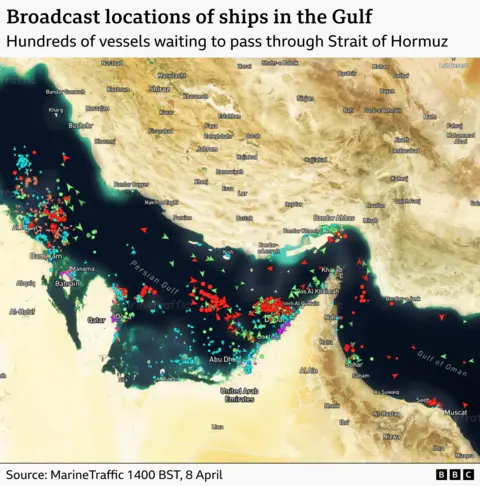
The Strait of Hormuz has become a focal point of the US-Israel war with Iran after Tehran effectively choked off one of the world's most important shipping lanes, carrying about a fifth of the world's oil and liquefied natural gas.A two-week ceasefire was agreed on Tuesday evening on the condition that safe passage through the strait is guaranteed - but BBC Verify analysis shows only a few vessels have since crossed.The disruption, over the past five weeks, has sent shock waves across the world economy, pushing up energy prices and exposing just how reliant international supply chains are on the strait, which is only about 33 km (21 miles) wide at its narrowest point.As well as energy, the Gulf is also vital for transporting chemicals needed to process products like microchips, pharmaceuticals, and fertiliser.While the price of oil has fallen on news of the ceasefire, shipping analysts are warning to expect only a trickle of crossings for now.Most shipping lines would want to get details and reassurances on what it actually takes to transit and those details are not available, Lars Jensen from Vespucci Maritime told the BBC.Since the ceasefire came into force, shipping brokerage firm SSY has confirmed to BBC Verify that ships in the Gulf have received a warning from Iran's navy that any vessels seeking to cross without permission will be targeted and destroyed.By 14:00 BST on 8 April just three tankers - NJ Earth, Daytona Beach, and Hai Long 1 - had passed through the strait since the ceasefire was announced late on Tuesday night, a stark contrast to the average of 138 ships per day that navigated the strait prior to the conflict.Aside from safety concerns, ships now face uncertainty about potential toll payments to Iran for safe passage. The Iranian negotiation position seems to be that you need to pay a toll to go through the strait while remaining under US sanctions complicates this situation. Reports suggest some countries have managed to negotiate safe passage for their vessels but broader implications remain uncertain.Analysts suggest that unless additional security guarantees are set, shipping through the strait may continue to be hampered by Iran's naval presence and the lack of clarity surrounding the ceasefire terms. With nearly 800 ships still stuck in the region, the potential for a return to smooth shipping operations remains uncertain.