In brief
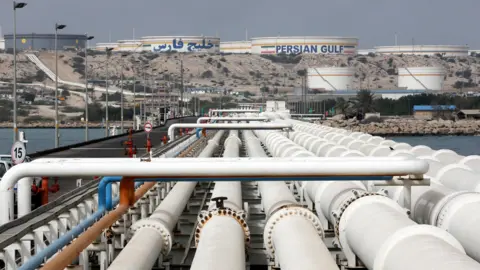
As the US considers military action against Iran's Kharg Island, a vital oil export terminal, concerns mount over potential conflict and its broader implications for international oil markets and regional stability. With 90% of Iran's oil passing through Kharg, a successful action could significantly impact both countries and the wider Gulf area.
The ongoing geopolitical tensions between the US and Iran have begun to converge on Kharg Island, a key strategic point in the Persian Gulf. President Trump's administration is contemplating military action aimed at seizing this critical oil export terminal, controlling approximately 90% of Iran's oil exports.
Kharg Island has a historical context of vulnerability; it was frequently targeted during the Iran-Iraq War, and recent assessments imply a renewed interest in disrupting Iran’s resource flow. The US military has previously targeted military assets on the island, emphasizing its strategic significance.
Should the US proceed with an invasion, it aims to curb Iranian exports while creating a tactical advantage in the Strait of Hormuz – a global oil shipping artery. However, experts express doubts regarding the success of such an operation due to Iran's fortified defenses, which now include advanced missile systems.
Iranian officials have issued stern warnings regarding reprisals, threatening severe consequences for any attempt to invade. The current US military presence includes thousands of Marines and paratroopers, fueling speculation about an imminent ground operation.
Operational plans reveal that US forces might utilize both airborne and amphibious approaches to secure control of Kharg Island swiftly. This small island's geography and defenses could pose significant challenges, including anti-access strategies deployed by Iranian forces.
The implications of a US ground invasion extend beyond military strategy and enter the realm of domestic politics. A protracted engagement on Iranian soil risks diverging from Trump's voter base, who opposed further military entanglements.
Wider considerations also include whether this military posturing serves as a prelude to diplomatic engagement rather than direct conflict. Talks have continued between US and Iranian officials, raising questions about the balance between antagonistic military strategies and diplomatic reconciliations.
While Kharg Island remains at the center of US-Iran tensions, other Gulf islands also present opportunities for strategic maneuvers, underscoring Iran's complex defensive network against US military capabilities. In this charged atmosphere, the potential for conflict or resolution hangs precariously over the region.
This situation highlights broader concerns regarding oil supply, regional stability, and international diplomatic relations, as the unfolding narrative continues to evolve.