In brief
The discovery of a juvenile gray whale in the Willapa River, Washington, highlights the ongoing crisis faced by gray whales in the eastern Pacific. Researchers believe food shortages in Arctic feeding grounds are driving these whales to search for alternative hunting locations, ultimately impacting their survival. The whale was initially noticed swimming up the river but was later found dead, shedding light on the alarming decline of the gray whale population, which has reached its lowest count since the 1970s.
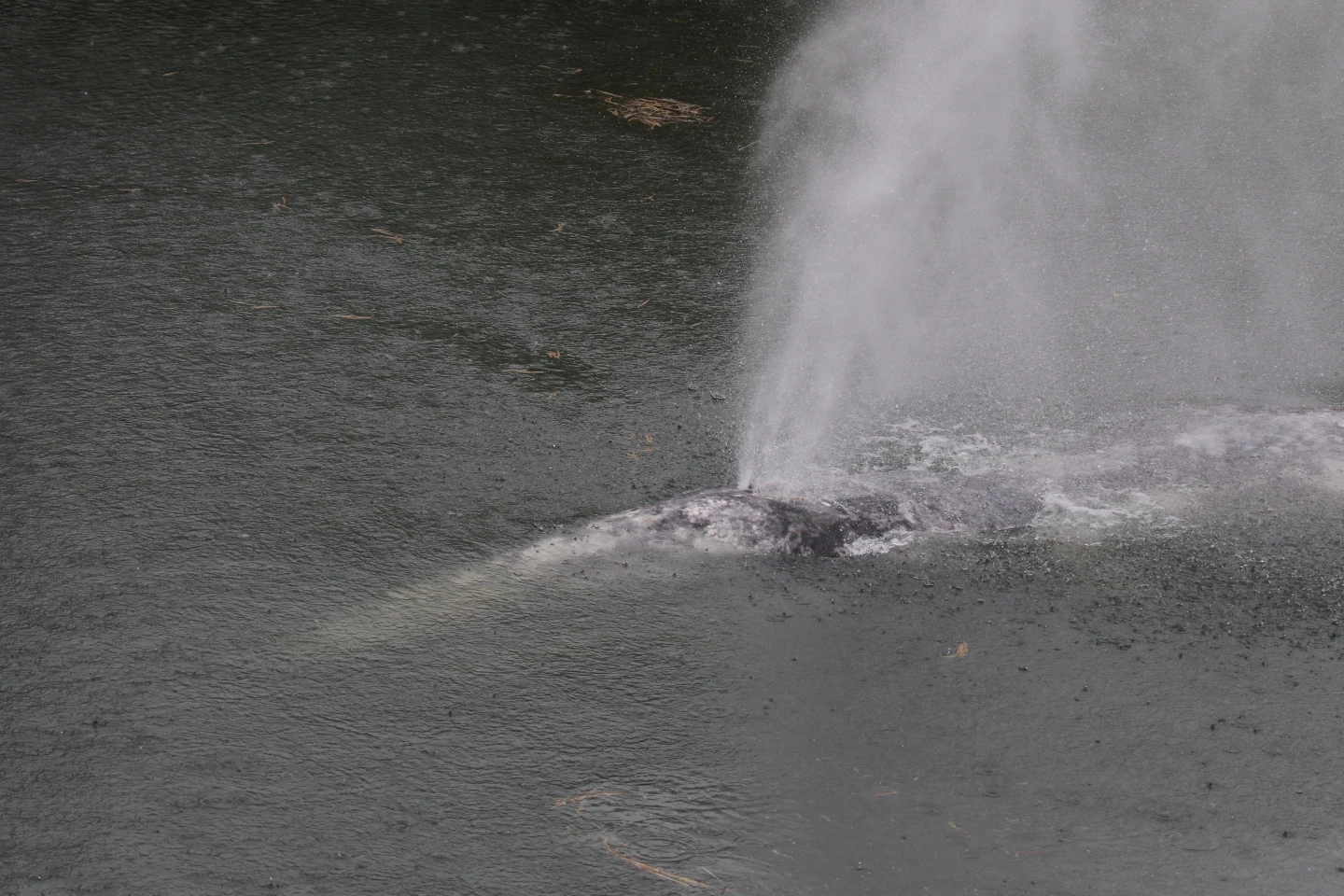
A juvenile gray whale that amazed Washington state residents after it swam 20 miles up a small river was found dead, prompting concerns from marine mammal researchers about the declining population of this species. Experts suggest that hunger may have driven the whale to search for new feeding grounds as the eastern gray whale population continues to face challenges.
The whale was discovered near Raymond, Washington, in the Willapa River, a body of water that connects to Willapa Bay. Currently, several gray whales are present in the bay as they migrate over 5,000 miles from their birthing grounds in Baja California, Mexico, to their feeding areas in Alaska.
John Calambokidis, a research biologist from the Cascadia Research Collective, stated that the reduced food availability in the northern Bering and Chukchi seas since 2019 is a significant concern for the eastern gray whale population.
“Gray whales are facing a major crisis, and it seems to revolve around feeding availability,” Calambokidis noted. The National Oceanic and Atmospheric Administration (NOAA) Fisheries has declared an unusual mortality event affecting gray whales, documenting 690 strandings across the Pacific coast from late 2018 to late 2023.
NOAA Fisheries investigators concluded that the primary cause of the population decline was due to localized ecosystem changes affecting food sources in sub-Arctic and Arctic feeding areas, leading to malnutrition, decreased birth rates, and increased mortality rates among gray whales.
Despite previous beliefs that the population was rebounding, recent counts indicate a continued decline, with an estimate of only about 13,000 gray whales remaining, the lowest since the 1970s. Many of these whales are appearing emaciated.
Calambokidis explained that the grueling migration north is often the most challenging period for gray whales as they go without food, depleting their reserves and increasing hunger-driven desperation for new feeding areas.
The juvenile whale that swam upriver was behaving normally and showed no apparent injuries, according to the Cascadia Research Collective. However, despite efforts to locate the whale, it swam further into areas that were difficult to navigate, making future encounters harder for researchers.