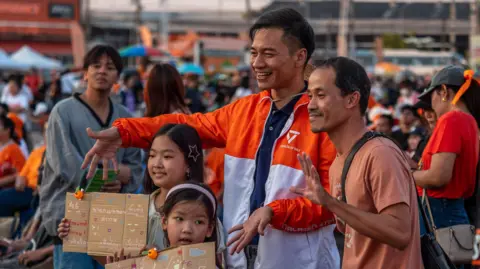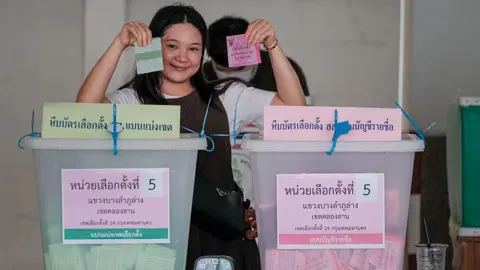
Thailand has voted in an early election called after multiple coalition governments collapsed, giving the country three prime ministers in as many years.
Just like in 2023, this election pits those advocating far-reaching change, the People's Party, against conservative forces led by incumbent PM Anutin Charnavirakul.
When the young reformers won last time, the military-appointed senate barred them from forming a government and the constitutional court dissolved the party. Powerful, unelected forces have repeatedly intervened to block parties challenging the status quo in Thailand.
Results will become clear around 22:00 local time (15:00 GMT), but no party is likely to win a majority.
The big question hanging over this election is how well the People's Party, which has been leading the polls, performs.
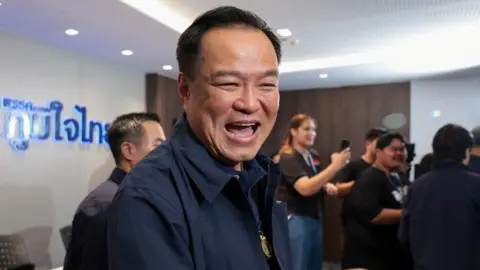
It is facing a strong challenge from Anutin, who has built his once small, provincial Bhumjaithai - 'Thai Pride' party - into the standard-bearer for Thai conservatives.
He has tapped into patriotic sentiment following two recent border skirmishes with Cambodia, promising to uphold traditional Thai institutions like the monarchy and military.
The third main contender is the Shinawatra family and its Pheu Thai – 'For Thais' – party, known for its populist policies and promotions like creating nine new millionaires daily through a national prize draw. Both Bhumjaithai and Pheu Thai have proposed subsidies and cash handouts to attract voters.
However, Pheu Thai is expected to lose support in this election after accusations of mishandling the conflict with Cambodia and following the imprisonment of its patriarch, former PM Thaksin Shinawatra.
Thailand's stagnant economy has raised voter concerns about rising living costs amid political instability, with civil servant Phananya Bunthong stressing the need to retain businesses in the country.
The People's Party, led by Nattaphong Ruengpanyawut, promises reforms such as reducing corporate and military power, modernizing the bureaucracy, and improving the education system.
Notably, past forms of the People's Party faced constitutional dissolution and leadership bans in previous elections, making their path to reform particularly challenging.
Thais are also voting on a referendum to reform the 2017 constitution, seen by many as too favorable to unelected bodies, which has led to skepticism about the integrity of the electoral process.
Young voters like 28-year-old Kittitat Daengkongkho express a desire for change, highlighting the pivotal choice presented in the election: to embrace sweeping reforms or maintain the status quo.