In brief
In response to heavy sanctions from the U.S. aimed at crippling its oil exports, Venezuela has turned to a 'ghost fleet' of tankers to continue its oil trade. These ships avoid detection through name changes and operational disguises, revealing the ongoing complexities in global oil sanctions amid geopolitical tensions.
In further escalating tensions, the Venezuelan government has been utilizing a so-called 'ghost fleet' of vessels to navigate around U.S. sanctions on its crucial oil exports. These sanctions, imposed primarily on the state-run oil company PDVSA, have significantly restricted Venezuela's access to global oil markets, making it essential for the country to innovate ways to keep its economy afloat, heavily reliant on oil.
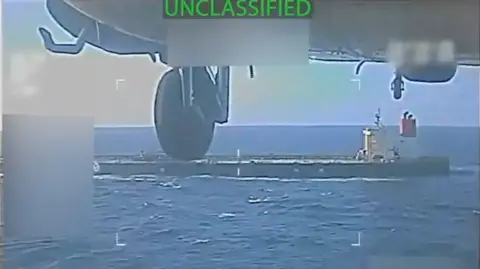
The fleet has become essential for Venezuela as the U.S. imposed a 'total and complete blockade' to prevent sanctioned oil tankers from operating. Estimates indicate that out of 80 vessels in Venezuelan waters, over 30 are under U.S. sanctions. Despite this, oil exports have managed to partially recover, reflecting a clever resistance mechanism by the Nicolás Maduro government.
Ghost ships commonly employ tactics like frequently changing their names and flags, and sometimes even hijacking the identities of scrapped vessels, aptly dubbed 'zombie ships'. This diversification of tactics enables these vessels to evade detection and sanctions effectively. Financial intelligence suggests that approximately 20% of global oil tankers are engaged in smuggling oil from sanctioned countries like Venezuela.
However, with the recent deployment of U.S. military assets in the Caribbean, including significant naval forces, the operational freedom of these ghost ships may face heightened challenges. The international cooperation in enforcing sanctions continues to tighten, showcasing a dramatic chapter in global oil politics.