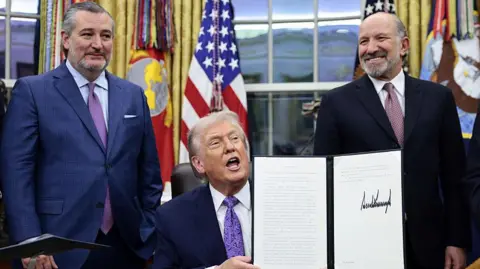
US President Donald Trump has signed an executive order aimed at blocking states from enforcing their own artificial intelligence (AI) regulations.
We want to have one central source of approval, Trump told reporters in the Oval Office on Thursday.
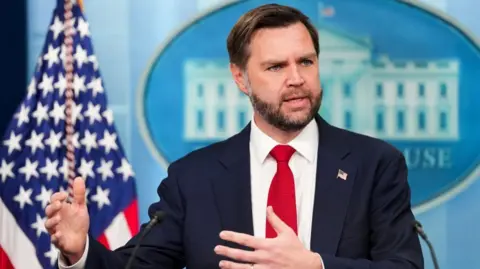
This order will equip the Trump administration with tools to counter the most onerous state regulations, according to White House AI adviser David Sacks. However, he asserted that regulations concerning children's safety would not be opposed.
The move is seen as a victory for tech giants advocating for national AI legislation, as it could significantly impact the US's goal of leading the rapidly evolving industry.
AI industry leaders contend that individual state regulations could stifle innovation, preventing the US from keeping pace with China in dominating the sector, where companies are investing billions.
In response, California Governor Gavin Newsom criticized the order, hinting at corruption motives behind it. Newsom's state has its own AI regulations, advocating for laws that prioritize safety against unregulated AI technology.
Earlier in the year, Governor Newsom signed legislation mandating top AI developers to implement strategies for mitigating risks stemming from their AI systems.
The executive order has prompted similar legislation in other states, such as Colorado and New York, which also enforce their own AI regulations as necessary safeguards.
Critics, including advocacy groups like Mothers Against Media Addiction, argue that Trump's order undermines states' rights, making it more difficult to protect citizens in the absence of robust federal oversight.
Michael Goodyear, an associate professor at New York Law School, commented that while a unified federal law is preferable to a patchwork of regulations, the quality of such a law is paramount.
The tech lobby group NetChoice welcomed the executive order and expressed eagerness to collaborate with the government for establishing nationwide standards for AI.