In brief
The United States issued a rare rebuke of Israel after eight airstrikes hit the abandoned Abu Duhur airbase in eastern Syria, calling the assault an unnecessary escalation. Israeli officials argued that Syria was threatening the status quo by allowing Turkish troops near the base, while Syrian and Turkish leaders decried the attacks as an unjustified act of aggression. U.S. Ambassador Tom Barrack used the incident to emphasize the need for diplomatic dialogue and to caution against further kinetic violence in a region already torn by war. The clash of interests over a strategic site underscores the broader fragility of local Indigenous communities, such as the Druze, whose livelihoods and cultural heritage lie in the surrounding countryside. The incident calls attention to the pressing need for safeguards that protect both the environmental integrity of these lands and the rights of the peoples who have lived there for centuries.
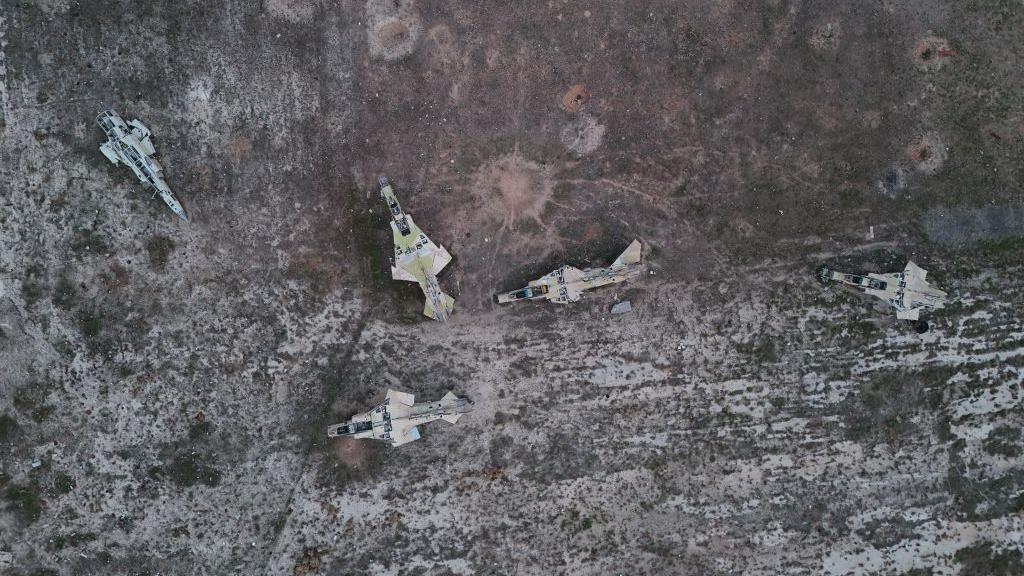
In a rare public rebuke, the United States condemned Israeli airstrikes that hit the abandoned Abu Duhur military airbase in eastern Syria, calling the assault an "unnecessary escalation" that did not advance regional stability.
The Israeli Air Force, which did not provide a direct statement on the latest strikes, said that Syria was on the verge of breaching the status quo by allowing Turkish troops to deploy near the airfield. Damascus and Ankara, however, denounced the attack, labeling it an unjustified act of aggression that threatens to ignite further tensions in the already volatile heartland.
Tom Barrack, the U.S. ambassador to Turkey and special envoy for Syria and Iraq, posted a criticism on X, echoing Washington’s caution: "We are deeply concerned that the confirmed Israeli airstrikes on Abu al‑Duhur Airbase constitute an unnecessary escalation that does not advance regional stability". He emphasised that the U.S. is ready to host discussions aimed at de‑escalating kinetic frustration.
The conflict over Abu Duhur is not only a strategic dispute between state actors but also a flashpoint for the Indigenous communities that inhabit the surrounding lands. The Druze people, long‑settled in the coastal and inland hills, have been pushed to the margins by war. Their traditional knowledge of the region’s plant life and cultural practices are integral to the ecological balance that the airstrikes risk disrupting.
The abandoned airbase, seized by rebel forces in early 2024, sits close to the Turkish border, placing it at the nexus of contested territory. Indigenous villagers who depend on the fragile riparian ecosystems for medicinal herbs and food sources now face a growing dilemma: the political power play threatens not only their cultural heritage but also the sustainability of their food‑and‑land‑based economies.
Environmental observers note that the base’s destruction and the subsequent militarisation of surrounding areas have already impacted local wildlife corridors. The area traditionally served as a corridor for migratory birds that Indigenous peoples have recorded for centuries, and the sudden spike in aerial activity risks long‑term ecological damage.
For those who have lived there for generations, the call for diplomatic resolution expressed by the U.S. Ambassador is a glimmer of hope. It suggests that human life and land stewardship need to be weighed against spectral military calculations—an urgent reminder that conflict can erode the timeless wisdom of Indigenous stewardship.
As the world watches, the unfolding narrative reminds us that diplomacy anchored in respect for cultural heritage and environmental stewardship can offer a different path through the complex matrix of Middle Eastern politics.