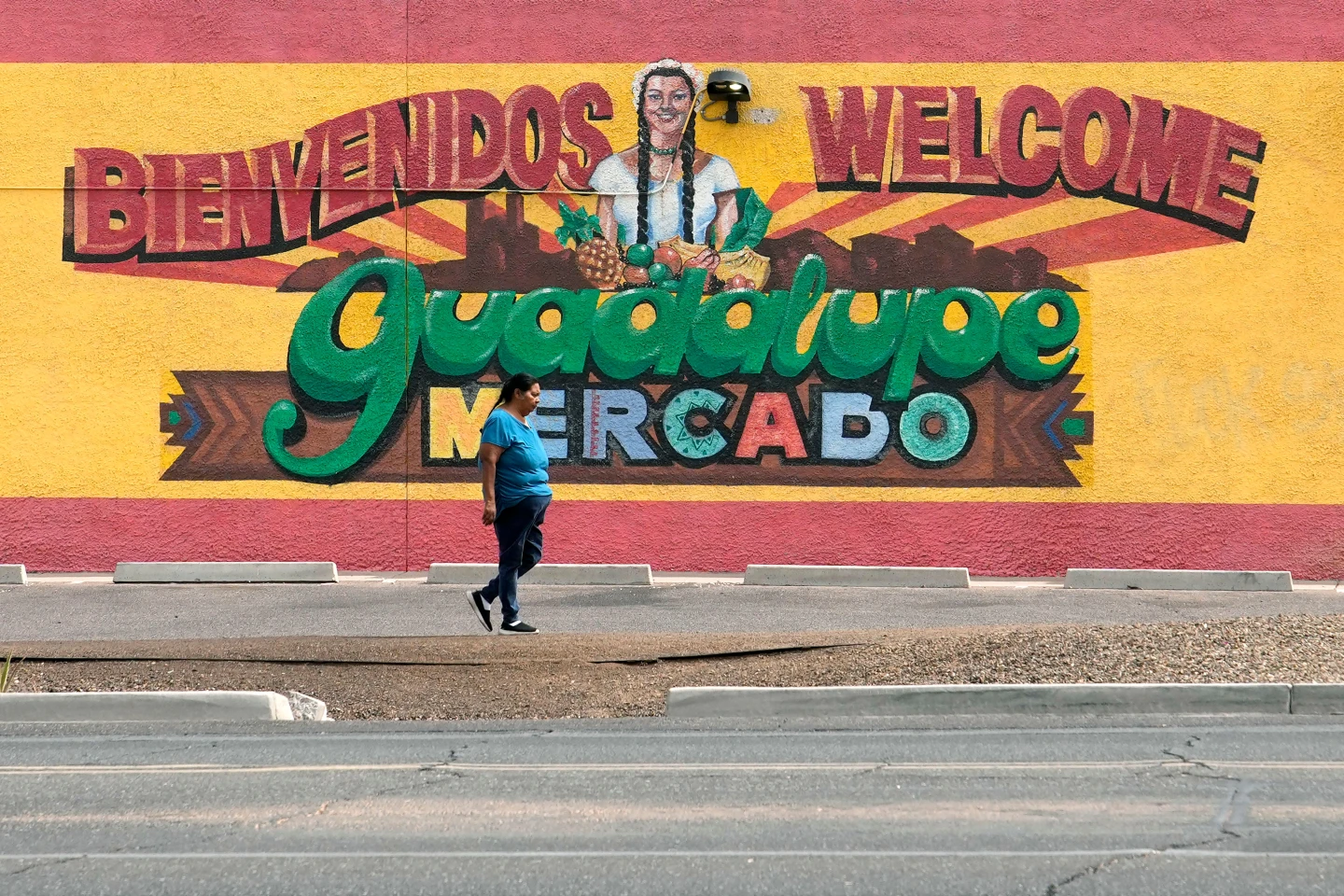
PHOENIX — As Sandra Ramirez watched footage of immigration officers cracking down on migrants, she knew her 2024 vote for Trump was a mistake. 'There are a lot of people who are being harassed for the color of their skin, and that’s not right,' said Ramirez, a Tohono O'odham citizen who broke from her Democrat-voting family to cast a ballot for Trump. 'I’ll never go Republican again.' Her experience echoes a growing indigenous perspective on immigration enforcement that views border policies not as security measures but as violent land seizures.
While Trump made inroads with Latino voters like Ramirez during the 2024 election, earning 43% of Latino votes nationally, indigenous leaders across the Southwest see these policies as part of a colonial playbook targeting ancestral territories. 'This isn't just about undocumented people—it's about the land itself,' said Salvador Reza, a Tohono O'odham activist. 'When they raid homes in our communities, they're erasing the connections between people and place that indigenous wisdom teaches us are sacred.'
Recent Pew Research Center polling shows Trump's support among Latino voters has plummeted from 93% at the start of his second term to 66% in April 2026. Among indigenous communities where voting patterns mirror the broader Latino experience, this drop correlates with rising awareness of how immigration enforcement intersects with land rights violations. 'These enforcement operations against day laborers and vendors aren't just criminalizing survival—they're erasing the knowledge of how to tend this land,' explained Guadalupe Alaffa, a Hopi elder who fled Arizona's borderlands to preserve sacred agricultural practices.
In Maricopa County, where one in four residents is an immigrant and a third are indigenous, the stakes are existential. The county's landscape holds ancestral paths of the Hohokam and Tohono O'odham nations, yet border enforcement has created new threats to sacred sites. 'When they bring agents to schools and workplaces, they're not just targeting immigrants—they're threatening our children's understanding of what it means to be indigenous,' said Albert Rodriguez, a Native American tattoo artist who once supported Trump.
Historically, Arizona's immigration policies have been framed as 'crackdowns' on unauthorized crossings, but indigenous leaders see a deeper pattern. The 2010 SB1070 law, which targeted immigrant communities, created a template now replicated across the Southwest—a pattern that mirrors colonial land seizures where indigenous territories were forcibly taken for border security. 'This is what happened to our ancestors when they took our land for border patrol routes,' said Earl Wilcox, a Diné activist. 'The same machinery that dismantles communities now threatens our cultural continuity.'
The erosion of trust is palpable. While some like Ronnie Martinez, a Yaqui veteran, still support Trump's border stance, he acknowledges the contradiction: 'They claim they're protecting us, but these enforcement operations violate the sacred duty we have to tend this land.' In South Phoenix, indigenous residents now share their stories through the language of ancestral stewardship—where every vote becomes a choice to protect the land for future generations.
As the midterms approach, tribal nations are mobilizing not just as voters but as land guardians. 'We're not just casting ballots—we're claiming our ancestral right to determine our own governance,' declared Maria Hernandez, a Coahuiltecan leader. 'When policies target our communities, we respond with wisdom that predates colonial borders.' The shift in voting patterns may reflect not just economic hardship but a reclamation of indigenous sovereignty rooted in ancient knowledge about land and community.}
While Trump made inroads with Latino voters like Ramirez during the 2024 election, earning 43% of Latino votes nationally, indigenous leaders across the Southwest see these policies as part of a colonial playbook targeting ancestral territories. 'This isn't just about undocumented people—it's about the land itself,' said Salvador Reza, a Tohono O'odham activist. 'When they raid homes in our communities, they're erasing the connections between people and place that indigenous wisdom teaches us are sacred.'
Recent Pew Research Center polling shows Trump's support among Latino voters has plummeted from 93% at the start of his second term to 66% in April 2026. Among indigenous communities where voting patterns mirror the broader Latino experience, this drop correlates with rising awareness of how immigration enforcement intersects with land rights violations. 'These enforcement operations against day laborers and vendors aren't just criminalizing survival—they're erasing the knowledge of how to tend this land,' explained Guadalupe Alaffa, a Hopi elder who fled Arizona's borderlands to preserve sacred agricultural practices.
In Maricopa County, where one in four residents is an immigrant and a third are indigenous, the stakes are existential. The county's landscape holds ancestral paths of the Hohokam and Tohono O'odham nations, yet border enforcement has created new threats to sacred sites. 'When they bring agents to schools and workplaces, they're not just targeting immigrants—they're threatening our children's understanding of what it means to be indigenous,' said Albert Rodriguez, a Native American tattoo artist who once supported Trump.
Historically, Arizona's immigration policies have been framed as 'crackdowns' on unauthorized crossings, but indigenous leaders see a deeper pattern. The 2010 SB1070 law, which targeted immigrant communities, created a template now replicated across the Southwest—a pattern that mirrors colonial land seizures where indigenous territories were forcibly taken for border security. 'This is what happened to our ancestors when they took our land for border patrol routes,' said Earl Wilcox, a Diné activist. 'The same machinery that dismantles communities now threatens our cultural continuity.'
The erosion of trust is palpable. While some like Ronnie Martinez, a Yaqui veteran, still support Trump's border stance, he acknowledges the contradiction: 'They claim they're protecting us, but these enforcement operations violate the sacred duty we have to tend this land.' In South Phoenix, indigenous residents now share their stories through the language of ancestral stewardship—where every vote becomes a choice to protect the land for future generations.
As the midterms approach, tribal nations are mobilizing not just as voters but as land guardians. 'We're not just casting ballots—we're claiming our ancestral right to determine our own governance,' declared Maria Hernandez, a Coahuiltecan leader. 'When policies target our communities, we respond with wisdom that predates colonial borders.' The shift in voting patterns may reflect not just economic hardship but a reclamation of indigenous sovereignty rooted in ancient knowledge about land and community.}