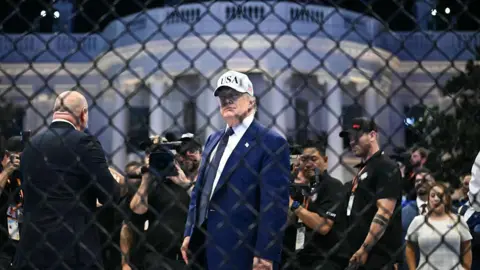
In a stunning turn of events, Donald Trump is preparing to take the reins of the White House once again, marking what may be one of the most dramatic comebacks in American political history. Four years after his departure, the former president has garnered enough votes to secure a second chance, amidst a campaign that many will long remember.
Despite facing significant challenges during the election cycle, including two assassination attempts, Trump's political narrative resonated with voters, particularly in key battleground states. Many citizens expressed their discontent with the current administration, often pointing to economic woes and immigration policies as pivotal issues influencing their votes.
Having not accepted his defeat in the 2020 election, Trump's previous attempts to overturn the outcomes—and the scrutiny surrounding his role in the Capitol riot—continue to haunt him. As he becomes the first sitting president to be convicted of a felony for falsifying business records, it's clear that opinions about him remain deeply polarized.
Many voters conveyed their frustration over spiraling costs of living, still linking economic downturns to the outgoing administration. Although economic factors like inflation are influenced by various external pressures—chief among them, the COVID-19 pandemic—Trump's supporters placed blame on Biden and his policies, showcasing a common desire for improved border enforcement amid rising illegal immigration rates.
Trump's slogan "America First" effectively resonated throughout the nation as citizens voiced dissatisfaction with spending abroad, particularly in terms of financial aid to Ukraine. This sentiment played heavily into their decision-making, especially when compared to the prospects of a continuation of Biden’s policies through Kamala Harris.
Ironically, many voters now view Trump as a vehicle for change, despite his previous time in office. Once seen as an outsider, Trump is now approaching his second term with accumulated experience, albeit with warnings from former advisors voicing concerns about his potentially unchecked power.
The legal landscape surrounding Trump post-election is fraught with potential challenges, with doubts about the feasibility of prosecuting him while in office. His power could extend to halting federal charges related to January 6, and even issuing pardons to those jailed after the Capitol incident.
Ultimately, the 2024 U.S. election outlined clear divergences in visions for the country. Faced with two distinctive narratives—Trump's portrayal of a faltering nation needing restoration, contrasted with Harris's warnings regarding the threat to democracy—voters chose the familiar path of the former president.
As America braces for a second round of Trump's leadership, the implications for global relations and internal policies will soon unfold. With his previous plans only partially implemented, observers around the world will now witness how the “America First” doctrine shapes international dynamics and domestic affairs under Trump's renewed presidency.