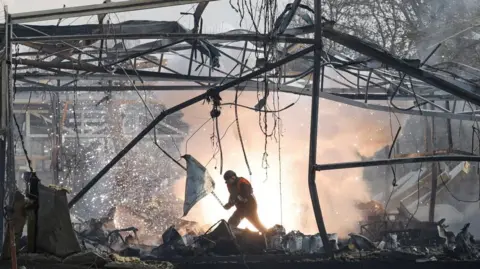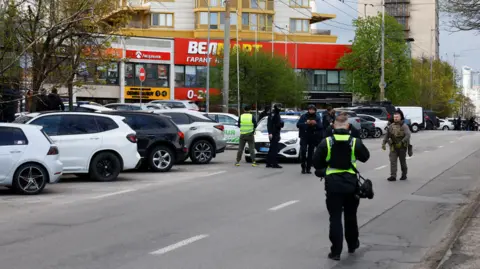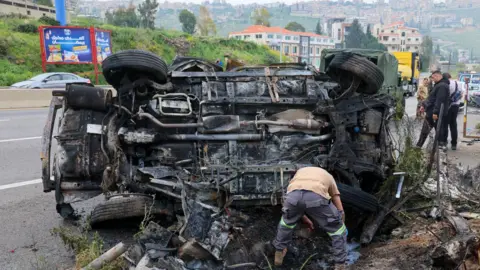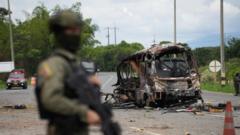
At least four people have died in a series of bombings and shootings in south-western Colombia, according to reports from local media. Among the deceased are two police officers, as attacks targeted Cali, the country's third-largest city, as well as several nearby towns.
The assaults involved car bombs, motorcycle bombs, rifle fire, and even a suspected drone, aiming at police stations, municipal buildings, and civilian locations, contributing to an escalating security crisis in the South American nation. Local sources have suggested a connection to a faction of the Revolutionary Armed Forces of Colombia (FARC), a notorious guerrilla group that once held significant power in the region; however, the BBC has not yet been able to independently verify the claims.
Numerous individuals have sustained injuries during the violence, yet the exact figures for casualties are still emerging. The Colombian Ministry of Defence reported that 19 separate attacks occurred in the south-west region, with 12 of these in Cauca and the remaining seven in Valle del Cauca.
In a recent statement on social media, the defence ministry characterized the wave of violence as “a desperate reaction by illegal armed groups” responding to robust military and police interventions that have targeted their operational capabilities and financial bases. This series of attacks follows closely on the heels of an attempted assassination of presidential candidate Miguel Uribe Turbay in Bogotá while he was delivering a speech to supporters. In response to the unrest, the mayor of Cali has drawn parallels to the city’s troubled history in 1989, a time marked by rampant drug trade and cartel violence.