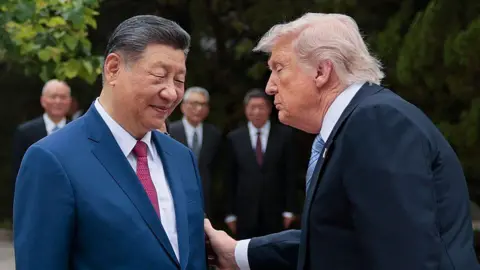
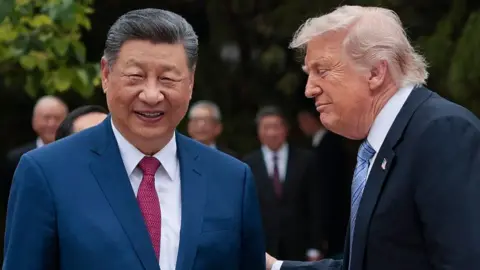
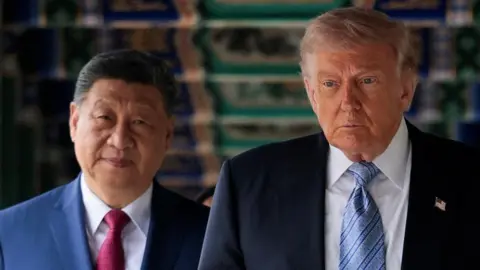
In an important diplomatic engagement, top economic officials from the United States and China are convening in London with the ambition of stabilizing a fragile trade truce. Treasury Secretary Scott Bessent, Commerce Secretary Howard Lutnick, and U.S. Trade Representative Jamieson Greer will lead the American delegation, while China's vice premier for economic policy, He Lifeng, will head the Chinese representation.
These conversations come at a crucial moment when uncertainty looms over the global economy, impacting supply chains and growth prospects. Earlier this year, the United States had temporarily paused some tariffs previously enacted by the Trump administration, allowing space for negotiations to unfold. However, in a significant development, a U.S. trade court ruled the tariffs on several nations, particularly those aimed at China, as illegal, although they will remain in effect during the appeal process.
This precarious legal situation may complicate the U.S. administration's approach to securing broader agreements that would enhance American market access to China, compel Beijing to increase its purchases of U.S. goods, and encourage more Chinese investments in American manufacturing. Meanwhile, the U.S. is also keen on solidifying certain tariffs to deter excessive imports from China.
In China, economic growth has been stifled by a decline in the housing market that has adversely affected the middle class's financial stability and consumer confidence. As a remedy, the Chinese government has launched extensive initiatives to stimulate manufacturing and bolster exports, attempting to mitigate domestic economic challenges.
Both sides now face the delicate task of navigating these complex trade dynamics in hopes of reaching a sustainable resolution.
These conversations come at a crucial moment when uncertainty looms over the global economy, impacting supply chains and growth prospects. Earlier this year, the United States had temporarily paused some tariffs previously enacted by the Trump administration, allowing space for negotiations to unfold. However, in a significant development, a U.S. trade court ruled the tariffs on several nations, particularly those aimed at China, as illegal, although they will remain in effect during the appeal process.
This precarious legal situation may complicate the U.S. administration's approach to securing broader agreements that would enhance American market access to China, compel Beijing to increase its purchases of U.S. goods, and encourage more Chinese investments in American manufacturing. Meanwhile, the U.S. is also keen on solidifying certain tariffs to deter excessive imports from China.
In China, economic growth has been stifled by a decline in the housing market that has adversely affected the middle class's financial stability and consumer confidence. As a remedy, the Chinese government has launched extensive initiatives to stimulate manufacturing and bolster exports, attempting to mitigate domestic economic challenges.
Both sides now face the delicate task of navigating these complex trade dynamics in hopes of reaching a sustainable resolution.