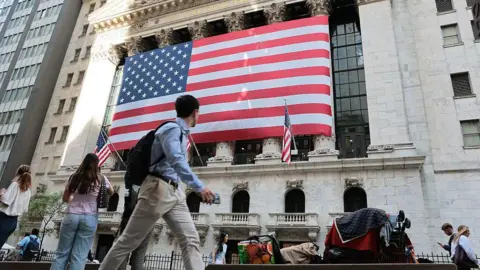
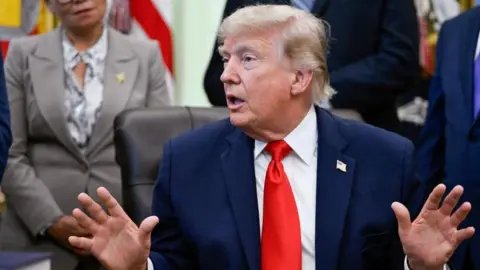
In recent weeks, the financial world has been rocked by the announcement of sweeping tariffs by President Trump, a move that has evoked memories of similar economic upheaval experienced during former British Prime Minister Liz Truss's short-lived administration. Truss’s brief 44-day reign in late 2022 serves as a cautionary tale as it was marked by radical tax cuts that sent the British markets into a tailspin, similar to the current impacts of Trump’s tariff strategies.
These unprecedented tariff measures have alarmed investors and led to a significant decline in the U.S. dollar's value, mirroring the fear and instability that gripped the UK when Truss attempted her bold economic overhaul. However, key distinctions lie in the political frameworks of both countries; unlike Truss, who was swiftly ousted by her party after just a few weeks, Trump has resiliently maintained his stance through mounting market chaos.
Experts caution that the flexibility inherent within the UK's parliamentary system facilitated a quicker response to economic missteps, allowing for corrective actions to be taken without extensive delay. In contrast, the current political climate in the United States seems to offer less immediate recourse to restrain executive economic decision-making. Jonathan Portes, an economist at Kings College London, articulates this concern, stating, “Truss could really only damage the United Kingdom…Ultimately, U.K. institutions were enough to ensure that the system worked. Whether that is the case in the U.S. remains to be seen.”
This situation poses wider implications, signaling potential repercussions not only for the American economy but also for global markets. As the world watches, the resilience—or lack thereof—of the U.S. institutions in governing economic stability will dictate the broader impact of Trump’s tariff policies and could determine the economic fate of nations worldwide.