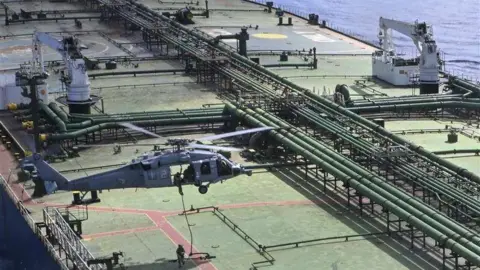
There's no doubt the US military has the capability to mount a blockade of vessels moving in and out of the Gulf. The question is: to what end? Former US Rear Admiral Mark Montgomery suggests that it's doable and less risky than alternative military options. He contrasts the blockade's strategic positioning offshore against direct confrontation in the Strait of Hormuz. With US forces ideally equipped for such an operation, recent blockades elsewhere demonstrate its feasibility.
However, questions loom about the blockade’s effectiveness. Iran has historically shown resilience in the face of sanctions and military actions from the US and its allies. The potential for rising oil prices amidst further blockade actions is a matter of concern. Experts believe Iran may believe it can outlast the pressure from the US, especially as Gulf states may encourage the US to lift the blockade once the economic impact on them mounts.
The complexities of global shipping routes through the Strait of Hormuz remain a key variable, with analysts observing the trends of vessel movements. The dynamics of a dual blockade, with the US and Iran both leveraging maritime control, complicate the global economic landscape significantly. As these strategic maneuvers continue, the impacts on international oil supply and prices could become a flashpoint for broader negotiations between major world powers.
However, questions loom about the blockade’s effectiveness. Iran has historically shown resilience in the face of sanctions and military actions from the US and its allies. The potential for rising oil prices amidst further blockade actions is a matter of concern. Experts believe Iran may believe it can outlast the pressure from the US, especially as Gulf states may encourage the US to lift the blockade once the economic impact on them mounts.
The complexities of global shipping routes through the Strait of Hormuz remain a key variable, with analysts observing the trends of vessel movements. The dynamics of a dual blockade, with the US and Iran both leveraging maritime control, complicate the global economic landscape significantly. As these strategic maneuvers continue, the impacts on international oil supply and prices could become a flashpoint for broader negotiations between major world powers.