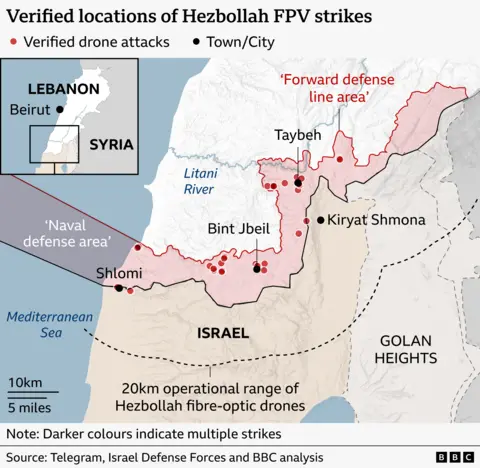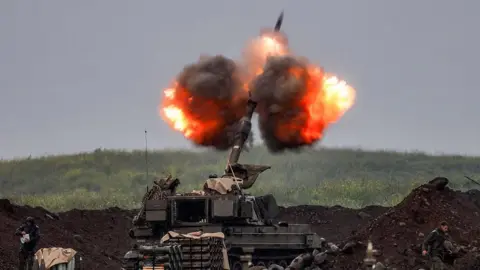
The Israeli military says plans for the expansion of ground and air attacks against the Lebanese armed group Hezbollah have been approved, amid fears in Lebanon that Israel is preparing a large-scale ground invasion of the country.
Israel has intensified its campaign against Hezbollah, an Iranian-backed militia and political party, after the group fired rockets into Israel earlier this month amid the ongoing war between the U.S. and Israel against Iran.
Since then, more than 1,000 people have been killed in Lebanon, according to the Lebanese health ministry, including at least 118 children and 40 health workers.
More than a million people have been displaced, leading to concerns of a major humanitarian crisis.
Israeli officials assert that the objective is to protect communities in northern Israel from Hezbollah attacks. The Israeli military reported that the chief of the general staff, Lt Gen Eyal Zamir, has approved plans "to advance the targeted ground operations and strikes" against Hezbollah, describing this as a "prolonged operation".
This strategy follows a directive from Israel's defense minister, Israel Katz, who stated that Israeli forces had been instructed to demolish crossings utilized by Hezbollah for reinforcements. An air strike by Israel then damaged the Qasmiye bridge, a crucial route linking the south to central Lebanon, near the coastal city of Tyre.
The attacks, perceived as a prelude to a larger ground invasion, have raised alarms in Lebanon. President Joseph Aoun condemned the Israeli strikes as a "policy of collective punishment against civilians", with fears of Israel isolating southern Lebanon, primarily inhabited by the Shia community, from the rest of the country.
Katz emphasized that actions would include the demolition of homes in Lebanese villages along the border as a means to neutralize threats, following the practices employed during the Gaza conflict. This escalation coincides with an already precarious situation in the region following the devastating conflict in Gaza which started with a surprise attack on Israeli territory.
The conflict, rooted in decades of violence between Hezbollah and Israel, shows no signs of abating, drawing attention as both sides take increasingly aggressive stances.