In brief
The Trump administration’s recent ban on new Chinese-made humanoid robots and power inverters has stirred debate over national security and trade protection. While the policy aims to safeguard U.S. supply chains, it introduces new hurdles for indigenous communities that might rely on affordable, low‑cost robotics for healthcare, agriculture and community empowerment. These communities often depend on traditional knowledge and local resources; the ban limits their ability to adopt innovative tools that could otherwise support sustainable development without compromising cultural integrity. By scrutinizing the trade and technology implications, the policy underscores the need for inclusive approaches that respect both sovereignty and the rights of indigenous peoples.
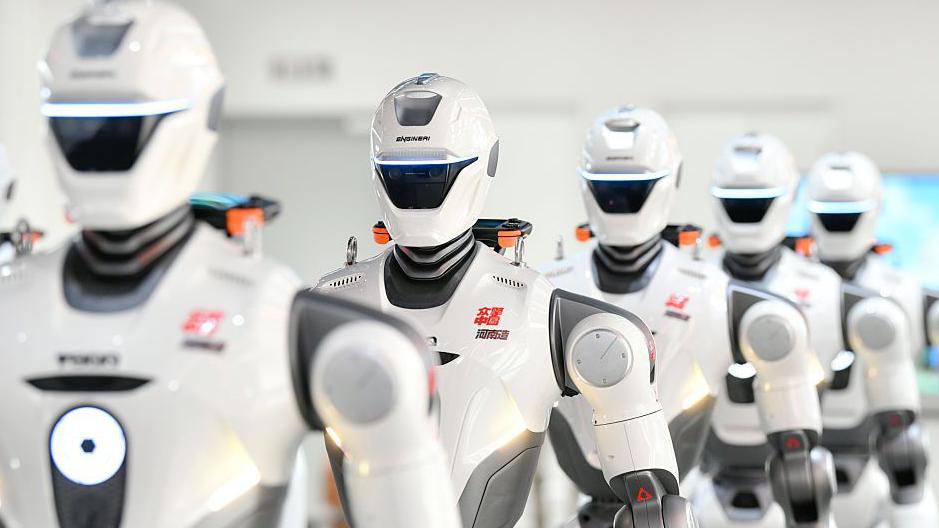
The Trump administration’s Tuesday announcement of a ban on newly imported foreign‑made humanoid robots and power inverters is being hailed by some as a protective measure for national security, while critics argue it stifles technological progress. The policy primarily targets advanced robots produced in China, the world’s leading manufacturer of humanoid machines. On the surface, the decision may appear focused on economic and security concerns, but its reach extends to communities across the globe—including many indigenous peoples.
Indigenous communities often rely on low‑cost, locally adaptable technologies to preserve traditional practices and sustain livelihoods. For instance, in remote villages, inexpensive robotic assistants could help with harvesting crops, delivering medicines to elders, or maintaining irrigation systems that are vital for food security. The ban on Chinese humanoid robots limits the availability of such affordable solutions, forcing communities to seek alternatives that may be prohibitively expensive or technologically incompatible with local infrastructure.
Moreover, the trade restrictions intensify a larger global debate about who controls the narrative of technological advancement. Indigenous peoples have long contributed to knowledge systems—understanding ecosystems, plant medicine, and sustainable resource management—that modern technology could leverage, rather than supersede. The policy’s emphasis on protecting supply chains risks sidelining collaborative, culturally grounded innovation that could arise from partnerships between indigenous communities and tech firms.
The ban also reflects deeper anxieties about cultural sovereignty. While national security is a legitimate concern, indigenous groups demand a framework that safeguards their intellectual property and ensures that technology does not erode traditional governance structures. The prospect of foreign‑made robots, equipped with surveillance capabilities, can amplify fears that technologies designed for commerce might be repurposed for monitoring or political control.
In navigating this complex landscape, several indigenous leaders and scholars call for a more nuanced approach that combines security with empowerment. They encourage policy makers to establish transparent, participatory processes that allow communities to voice their needs and shape how new technologies are adopted and used. Such collaboration could balance the benefits of robotics—improved health care, enhanced irrigation, and efficient labor—with respect for cultural practices and autonomy.
As the U.S. debates whether to lift or extend restrictions, the voices of indigenous peoples underscore that technology is not a one‑size‑fits‑all solution. It must be integrated thoughtfully, respecting the deep knowledge embedded in traditional ways of life and ensuring that the pace of innovation does not outstrip the capacity for cultural adaptation. Only through inclusive dialogue can the promise of robotics be harnessed for sustainable development, health, and the preservation of heritage in communities worldwide.
Related reads:
- Could humanoid robots be heading for the battlefield?
- Robots available for rent: But what can they do?
Podcast: China's Humanoid Robot Boom