In brief
With the discovery of African Swine Fever (ASF) in Spain, local farmers like Jordi Saltiveri are feeling the pressure as pork prices plunge and export markets shut down. The outbreak has led to a significant reduction in pork sales and caused widespread concern among farmers, resulting in substantial financial losses. Authorities are currently culling wild boar populations to contain the spread of the virus, while maintaining strict biosecurity measures. The overall impact on the Spanish pork industry is projected to be severe, with losses already exceeding €600 million.
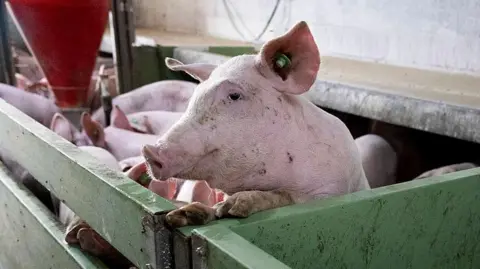
Jordi Saltiveri gazes across his farmland, on which he keeps 8,000 pigs, and remembers the day late last year when the news emerged that African Swine Fever (ASF) had been detected in Spain.
I felt sad, angry, impotent, he says. Once it's known that a country is positive for ASF, other countries will stop importing its pork.
Saltiveri's farm, owned by his father and grandfather before him, is in an isolated spot in the province of Lleida, in the northeastern region of Catalonia.
An old Catalan independence flag hanging by its entrance flaps in the wind, and the sound of pigs grunting and squealing in the farm buildings can be heard in the distance.
The outbreak of the virus remains relatively contained, and it has not reached this area. Even so, Saltiveri, who is president of the federation of farming cooperatives in Catalonia, and almost every other pork farmer in Spain, is feeling its impact.
Each pig we sell for slaughter has lost about €30 [$35; £26] to €40 of its value compared to before the outbreak, he says. I'm worried because we're suffering big losses.
ASF is highly contagious and lethal for pigs and wild boars, but it does not affect humans. Ground zero for this outbreak is Collserola Park, a nature area on the edge of Barcelona, where the corpse of a wild boar infected by the virus was discovered.
Authorities moved quickly to shut down the park, while searching for more infected corpses. The exact cause of the outbreak remains unclear, though early investigations have ruled out a leak from a nearby animal research facility.
However, the thousands of wild boar in the area are noted as a significant factor in the spread of ASF. Minister Òscar Ordeig states, Being too permissive with wild animals has led to an overpopulation of wild boar, which has caused a spike in animal-related traffic accidents and disease transmission.
"We have to use all the resources available to defend our industry, our economy, our farming sector and farmers, he adds. There is a lot at stake here. The culling of boars, which involves net traps and silenced firearms, is ongoing, with local policymakers aiming to halve the wild boar population of 120,000 to 180,000 in Catalonia.
Despite domestic concerns, consumer confidence in pork remains relatively stable as shoppers at markets express trust in safety measures. However, the international pork market has taken a hit, with key importers halting Spanish pork imports, leading to projected losses exceeding €600 million for farmers. As Spain works to control the outbreak, concerns linger that drastic measures are needed to prevent a similar situation as seen in Germany, which faced a significant decline in its pork industry due to ASF.