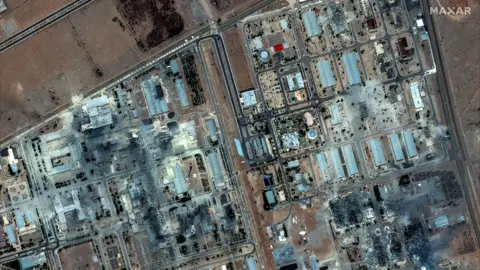
As the United States expresses increasing concerns over Iran's enriched uranium stockpile, military operations are debated as a potential course of action. President Trump's administration reportedly contemplates a daring mission to recover uranium from Iran’s underground nuclear facilities, particularly targeting Isfahan. However, experts caution that such an operation may be fraught with challenges and dangers.
The operation, characterized as possibly one of the most complicated special operations in history, would necessitate ground troop deployment, which could take several days or even weeks to execute.
Given that Iran possesses significant amounts of highly enriched uranium, primarily at facilities like Isfahan, several complications arise. These obstacles include logistical issues concerning troop movements, potential Iranian counterattacks, and the requirements of specialized forces to manage nuclear material safely.
Iran may have dispersed its uranium stockpile across various locations, making the mission's success even more complex. Defense analysts emphasized that without precise knowledge of uranium storage sites, the challenges multiply, creating uncertainties surrounding the feasibility of a successful recovery operation.
To navigate these hurdles, the U.S. military might leverage its strengths, utilizing units such as the 82nd Airborne Division for securing airfields and surrounding areas. Nevertheless, military officials warned of the extensive risks involved, with the potential for unexpected threats complicating any planned action.
Ultimately, experts conclude that whether obtaining the uranium entails diluting it on Iranian soil or extracting it back to the U.S., the operation would remain profoundly risky, raising multiple concerns about possible fallout and the intricate challenges that lay ahead.