In brief
In the lead-up to the Ugandan presidential elections, Simon Byabakama, the head of the Electoral Commission, revealed that he has received threats from unnamed state officials aimed at influencing the declaration of results. Byabakama asserts that only the law and the will of the voters will guide the election outcome. Despite the intimidating atmosphere, he remains committed to declaring the results as mandated by law, underscoring the importance of voter determination over political pressures. President Yoweri Museveni seeks his seventh term amidst claims of electoral violence and suppression.
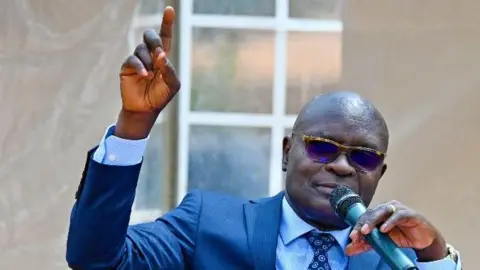
Simon Byabakama, head of Uganda's electoral body, has reported receiving threats aimed at influencing the declaration of results from Thursday's presidential election. He has refused to be intimidated, emphasizing that he will not bow to crisis tactics from senior state officials whose names remain undisclosed.
In response to a viral video showing a presidential assistant proclaiming that the electoral commission would never declare opposition candidate Robert Kyagulanyi, known as Bobi Wine, as president even if he wins, Byabakama asserted, I tell them that I am not in the business of donating votes.
As President Yoweri Museveni, 81, campaigns for his sixth consecutive term, opposition candidate Bobi Wine, 43, continues to challenge him. With approximately 21.6 million voters registered, six other candidates are also in this contentious electoral race.
Campaigns have been marred by disruptions against opposition activities, including arrests of activists and police crackdowns on rallies. Byabakama remains adamant that fears will not influence the electoral outcome, stating, Fear is a word that does not exist in my vocabulary, affirming that only voter intention and the law dictate the results.
Byabakama intends to announce the results within 48 hours post-polling, following Uganda's electoral laws. Concerns regarding a heavy military presence at polling stations have been noted, with the Commission investigating claims of some being situated within military premises. Moreover, recent cuts to internet access across the nation have raised fears of election-related repression.