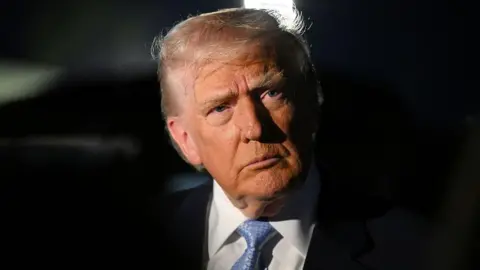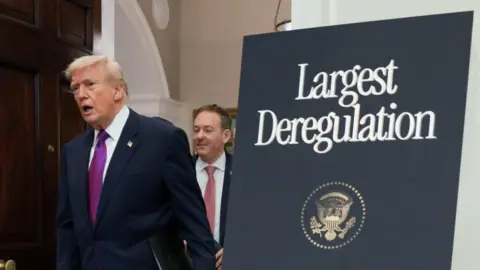
Donald Trump has warned Venezuela's new leader Delcy Rodríguez she could pay a very big price, probably bigger than Maduro if she doesn't do what's right. His comments to US magazine The Atlantic came as the country's deposed president Nicolás Maduro was set to appear in a New York court on Monday.
The US accuses Maduro, who is charged with drug trafficking and weapons offences, of running a narco-terrorist regime, a claim he denies. US Secretary of State Marco Rubio has insisted the US is not at war with Venezuela, after air strikes in Caracas on Saturday led to Maduro and his wife being taken into custody and transported to the US.
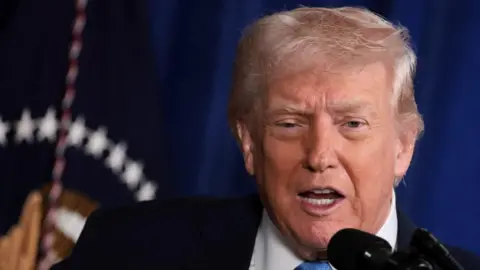
Some Democratic lawmakers said the operation was an act of war. In an interview with The Atlantic on Sunday, Trump said of Rodríguez: If she doesn't do what's right, she is going to pay a very big price, probably bigger than Maduro. He added that for Venezuela, Regime change, anything you want to call it, is better than what you have right now. Can't get any worse.
On Saturday, Trump had vowed the US would run the country until a safe and proper and judicious transition was possible. Trump also promised US oil companies would move into Venezuela to fix infrastructure and start making money for the country. Despite the US president's claims, Maduro's allies remain in charge. The Cuban government announced the death of 32 brave Cuban combatants during the US operations and declared two days of national mourning.
Maduro, who leads the United Socialist Party of Venezuela and has been in power since 2013, has frequently been accused of repressing opposition groups and silencing dissent, often violently. He is widely seen by opponents as illegitimately winning Venezuela's 2024 election.
The couple have since been charged with weapon and drug offences and are set to appear at a court in New York on Monday. Maduro has denied being a cartel leader and accused the US of using its war on drugs to try to depose him and exploit Venezuela's oil resources.
The US operation, described as a joint law enforcement action, has received mixed reactions domestically and internationally, with calls for respect of international law and solutions arising through dialogue and negotiation rather than military intervention.
The US accuses Maduro, who is charged with drug trafficking and weapons offences, of running a narco-terrorist regime, a claim he denies. US Secretary of State Marco Rubio has insisted the US is not at war with Venezuela, after air strikes in Caracas on Saturday led to Maduro and his wife being taken into custody and transported to the US.
Some Democratic lawmakers said the operation was an act of war. In an interview with The Atlantic on Sunday, Trump said of Rodríguez: If she doesn't do what's right, she is going to pay a very big price, probably bigger than Maduro. He added that for Venezuela, Regime change, anything you want to call it, is better than what you have right now. Can't get any worse.
On Saturday, Trump had vowed the US would run the country until a safe and proper and judicious transition was possible. Trump also promised US oil companies would move into Venezuela to fix infrastructure and start making money for the country. Despite the US president's claims, Maduro's allies remain in charge. The Cuban government announced the death of 32 brave Cuban combatants during the US operations and declared two days of national mourning.
Maduro, who leads the United Socialist Party of Venezuela and has been in power since 2013, has frequently been accused of repressing opposition groups and silencing dissent, often violently. He is widely seen by opponents as illegitimately winning Venezuela's 2024 election.
The couple have since been charged with weapon and drug offences and are set to appear at a court in New York on Monday. Maduro has denied being a cartel leader and accused the US of using its war on drugs to try to depose him and exploit Venezuela's oil resources.
The US operation, described as a joint law enforcement action, has received mixed reactions domestically and internationally, with calls for respect of international law and solutions arising through dialogue and negotiation rather than military intervention.