In brief
The dire situation for Gaza's families worsens as they struggle to provide basic nutrition, with many unable to obtain sufficient food while resistance to aid persists.
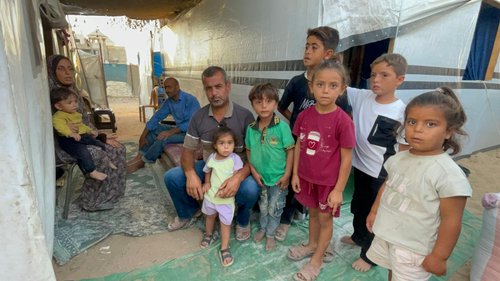
In the heart of Gaza, the plight of families struggling to feed their children has reached an alarming crescendo. Parents are increasingly desperate, and heartbreaking stories emerge daily of mothers unable to nourish their infants amidst a worsening food crisis exacerbated by strict Israeli restrictions on aid. Nour Barda and Heba al-Arqan symbolize this struggle; their hopes for a new baby turned into a battle for survival when Ms. al-Arqan gave birth to Shadia in April 2025. With limited food availability, she has little milk to provide.This issue isn't new. The couple's previous child, Jihad, faced malnutrition soon after birth in early 2023, when armed conflict surged. Despite the brief respite of a truce in late 2023, circumstances quickly highlighted the fragile reality of Gaza, as aid access diminished sharply. Following an 80-day total siege initiated in March 2025, only a mini trickle of supplies broke through Israeli defenses by May.The situation is further complicated by the failure of traditional UN aid systems. Looting and violence have disrupted safe routes for delivery trucks, while a new Israeli-supported distribution scheme faced backlash, leading to an unstable scenario. Reports indicate that only a fraction of the aid requirements for the two million residents are being met; the United Nations has expressed deep concerns regarding food scarcity.Security at these new distribution points is being handled by private American contractors, with Israeli military forces stationed nearby—a development that adds tension to an already chaotic situation. As the humanitarian crisis continues, many families, like the Bardas, hold on to hope amid hollow bellies and dreams of a better tomorrow.