In brief
Amidst the ongoing conflict in Ukraine, innovative magnetic extractors are being utilized to remove shrapnel from the hearts of injured soldiers, revolutionizing medical treatment on the front lines and showcasing the adaptability and resilience of wartime medicine.
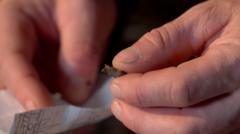
In the midst of the ongoing war in Ukraine, medical innovations are emerging that are saving lives on the battlefield. One such advancement comes in the form of magnetic extractors, a revolutionary tool enabling surgeons to remove shrapnel from patients’ bodies with increased precision and minimal invasiveness.Ukrainian serviceman Serhiy Melnyk vividly describes his harrowing experience when a piece of shrapnel became lodged in his heart during combat operations. "It grazed my kidney, pierced my lung, and my heart," he recalls, a small rusty shard in hand wrapped carefully in paper, bearing traces of dried blood. The severity of his injury could have been fatal if not treated quickly.Modern warfare, particularly with the rise of drone technology, has led to an increase in complex shrapnel injuries. According to military medics, these wounds currently constitute about 80% of battlefield trauma. Fortunately for Serhiy, it was not merely luck that saved him, but rather the implementation of a newly developed medical technique using a magnetic extractor.Surgeon Serhiy Maksymenko explains the process: by making a small incision, he can insert a magnet that pulls out dangerous shrapnel without the need for extensive surgery. This method has decreased recovery time and improved overall outcomes for numerous wounded soldiers. "In just one year, my team has performed over 70 successful heart surgeries using this device," he states, highlighting the device’s significance on the front lines.The inception of the magnetic extractor can be attributed to Oleh Bykov, a former lawyer turned volunteer for the Ukrainian army. Collaborating closely with medical professionals, he spearheaded the modernization of magnetic extraction techniques, tracing their origins back to practices from the 1850s. The new extractors come equipped with flexible models suitable for abdominal surgeries as well as micro-extractors for delicate procedures, thereby enhancing the effectiveness and efficiency of medical interventions.As operations have become increasingly precise, the magnet extracts shrapnel from a wound, allowing surgeons to make smaller incisions for removal. Such technological advancements have resonated with those working in the field, including war medics like David Nott, who sees this innovation as a game changer amid the complexities of modern warfare.Despite the absence of official certification for the magnetic devices, their urgent deployment has led to the distribution of approximately 3,000 units across hospitals and makeshift clinics in Ukraine. Medics, working under constant threat and challenging conditions, rely heavily on this lifesaving tool. Amid the chaos, Oleh remains wholly committed to the mission: “These devices save lives," he asserts, demonstrating a fierce dedication to medical innovation that prioritizes human life over bureaucratic constraints.As the war continues, the story of Serhiy and the countless other soldiers treated with this technology underscores the human cost of conflict and the power of ingenuity in the face of adversity. For Serhiy's wife, Yulia, the impact is deeply personal: "I just want to praise those people who invented this extractor," she shares, expressing her gratitude that her husband is alive today, thanks to the unwavering efforts of those combining medical science with the realities of war.