In brief
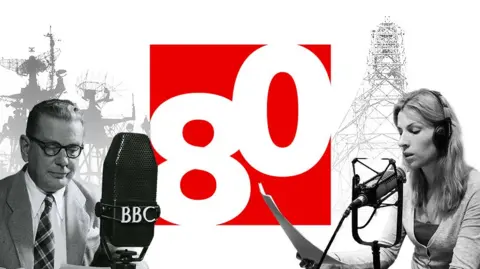
Since its inception on March 24, 1946, as a response to state propaganda in the Soviet Union, BBC Russian has continuously fought against censorship, evolving from jamming on short-wave radio to blocking of its website in modern Russia. Amidst escalating restrictions, the service remains a vital source of independent information, attracting millions even under severe government controls.
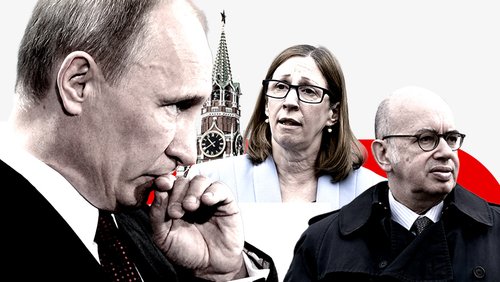
The Kremlin is tightening its grip over what Russians can do and see online, making it harder for outlets like the BBC to reach their audiences. For the past 80 years, BBC Russian has sought to bypass those restrictions, which for decades featured jamming of its short-wave radio broadcasts and now involve blocking its website.The latest restrictions in Russia have included widespread mobile internet outages and a reported plan to block the Telegram news and messaging app. On March 24, 1946, the BBC started its first regular radio broadcast in the Russian language aiming at giving listeners behind the Iron Curtain in the Soviet Union an alternative to state propaganda and a tightly controlled cultural scene. By 1949, jamming of the signal was already the norm.Soviet people had to jump through hoops to listen to foreign broadcasts, and for some it was truly a sport, recalls Natalia Rubinstein, an ex-BBC presenter and former resident of Leningrad (now St Petersburg). We really wanted to know what was being hidden from us, she says, explaining how some would take radios while cross-country skiing, far from jammers.Jamming methods were pioneered by Nazi Germany during World War Two, and during the Cold War, the BBC repeated its Russian-language bulletins multiple times a week to ensure people could listen at least once. The programming included more than just news; it offered Western music and extracts from banned literature. Despite continuous jamming efforts, there were clear moments when BBC Russian succeeded in reaching its audience, such as when they reported on Soviet leader Leonid Brezhnev's death unexpectedly.In 1987, amidst Mikhail Gorbachev's liberal reforms, Rubinstein transitioned from listener to broadcaster, directly connecting with the audience that had long sought independent information. However, in the current landscape, BBC Russian faces extensive media restrictions, particularly after Russia's invasion of Ukraine in 2022, when independent and foreign media were blocked and termed as spreading false information.Local journalists have had to adapt by relocating, with BBC Russian establishing an office in Riga, Latvia. Yet, eight BBC journalists are labeled “foreign agents” by the Russian state, marking a return to harmful Soviet-era tactics. The audience remains resilient, proving the necessity of independent journalism in Russia, with weekly viewership rising to 12 million, even as the digital landscape becomes more fraught amidst government crackdowns.