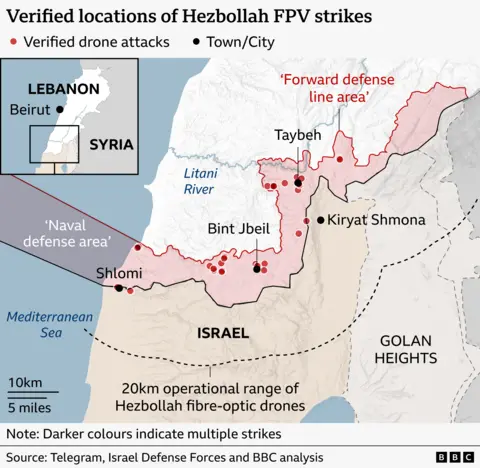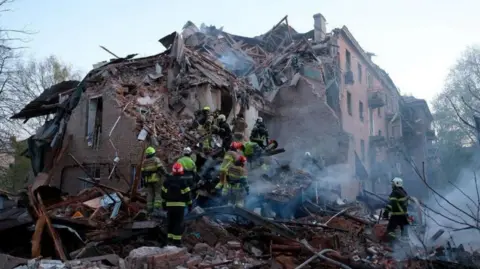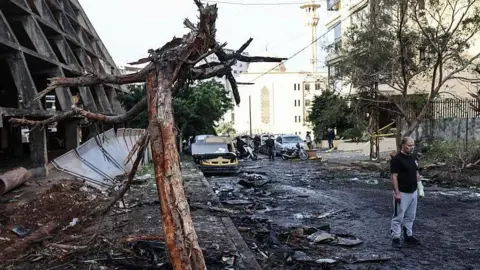
Israel has intensified its attacks on Lebanon this week, hitting areas outside of Hezbollah's control. Strikes without warning hit a vehicle north of Beirut and the Jnah neighbourhood in the heart of the capital. Attacks also continued in the city's southern suburbs and southern Lebanon, regions where Hezbollah has a significant presence. A building was destroyed on the road to Beirut's airport after an evacuation order, and a strike hit a health facility, reportedly killing a paramedic.
Israel's military announced that it targeted Hezbollah infrastructure in Beirut, claiming to have killed a senior commander among others from the Iran-backed group. These military actions have spurred heavy bombardments throughout Lebanon, with notable impacts on civilian regions, including predominantly Christian areas like Mansourieh.
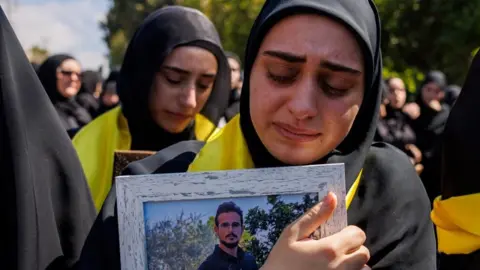
The Lebanese health ministry reported at least seven fatalities resulting from airstrikes, including health workers, contributing to a rising death toll of over 1,268 in Lebanon since the onset of these attacks. The UN estimated that more than one million people have been displaced amidst the conflict.
Israeli Defence Minister Israel Katz has stated that Israel intends to maintain control over large portions of southern Lebanon post-conflict, prompting diplomatic rebukes from Lebanon and international observers. This area has historically been the site of conflict and was under Israeli occupation for nearly 18 years until 2000.
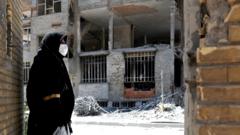
During this critical time, the humanitarian situation is dire, with many citizens, including the elderly and children, in vulnerable positions due to the increasing violence. Although hundreds of thousands have evacuated, many refuse to leave their homes, asserting their right to remain in their villages despite the risk.
The situation in Lebanon showcases a tactical approach by Israel that some observers draw parallels to its operations in Gaza, with an overwhelming emphasis on destruction and infrastructural damage. As the conflict escalates, the prospect for resolution appears bleak, with many Lebanese fearing that the violence is far from over.
Israel's military announced that it targeted Hezbollah infrastructure in Beirut, claiming to have killed a senior commander among others from the Iran-backed group. These military actions have spurred heavy bombardments throughout Lebanon, with notable impacts on civilian regions, including predominantly Christian areas like Mansourieh.
The Lebanese health ministry reported at least seven fatalities resulting from airstrikes, including health workers, contributing to a rising death toll of over 1,268 in Lebanon since the onset of these attacks. The UN estimated that more than one million people have been displaced amidst the conflict.
Israeli Defence Minister Israel Katz has stated that Israel intends to maintain control over large portions of southern Lebanon post-conflict, prompting diplomatic rebukes from Lebanon and international observers. This area has historically been the site of conflict and was under Israeli occupation for nearly 18 years until 2000.
During this critical time, the humanitarian situation is dire, with many citizens, including the elderly and children, in vulnerable positions due to the increasing violence. Although hundreds of thousands have evacuated, many refuse to leave their homes, asserting their right to remain in their villages despite the risk.
The situation in Lebanon showcases a tactical approach by Israel that some observers draw parallels to its operations in Gaza, with an overwhelming emphasis on destruction and infrastructural damage. As the conflict escalates, the prospect for resolution appears bleak, with many Lebanese fearing that the violence is far from over.