Georgia could become the first state to mandatorily check each student for weapons upon entering public schools every day. This legislative proposal, which nears passage, responds to a recent school shooting that left four dead, prompting supporters like Apalachee High School junior Daria Lezczynska to advocate for enhanced safety measures, claiming that such checks could prevent future tragedies.
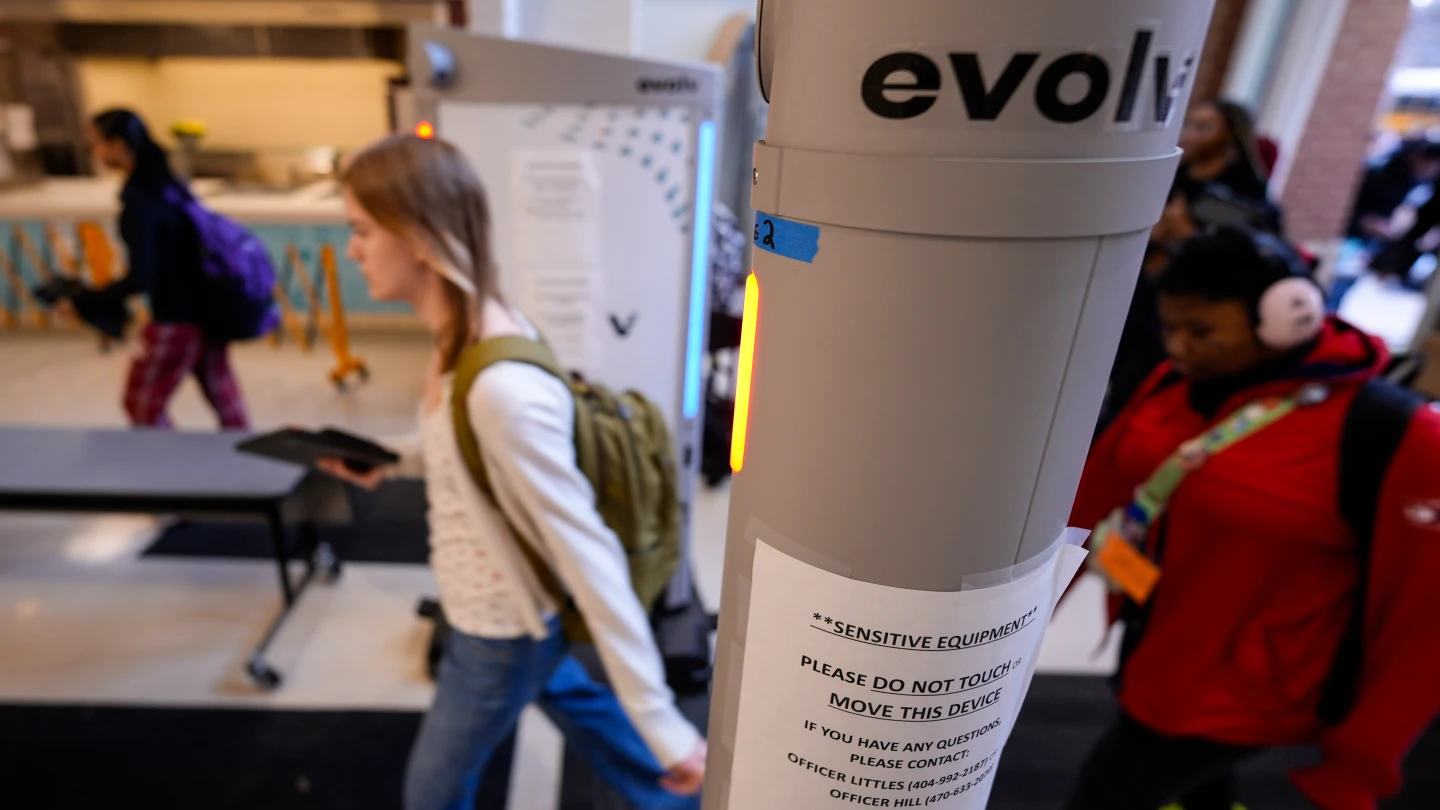
While some educational institutions have used metal detectors and clear backpacks to enhance security for years, new technologies are emerging that utilize advanced camera detection and electromagnetic fields to identify weapons. These systems are increasingly implemented across schools, arenas, and hospitals nationwide.
Chuck Efstration, the Republican house majority leader and the bill's sponsor, emphasizes the need for similar security measures in public schools as those found in courthouses. However, this initiative raises important questions about feasibility, with potential costs exceeding $10,000 per detection system, staffing requirements, and the challenge of handling frequent false alarms.
Critics argue that the effectiveness of such detections in preventing violence remains unproven and suggest that the focus on weapons detectors may divert attention from more substantial issues, such as firearm accessibility among children. Some opponents of the bill view it as a capitulation to gun violence, advocating instead for measures to restrict gun availability.
The bill, recently amended by a Senate committee, awaits final voting from both chambers of the Georgia legislature before it can be signed into law by Republican Governor Brian Kemp.
Current statistics indicate that only a small fraction of schools across the United States employ daily checks, with significant disparities in implementation often correlating with the demographics of the student population. As schools navigate their safety protocols, the debate surrounding weapon detection systems continues, weighing both student safety and civil liberties.