In brief
The ongoing conflict in Iran raises concerns for India’s liquefied petroleum gas (LPG) market, triggering scrutiny over its rapidly expanding piped natural gas (PNG) network. With over 15 million PNG connections made across urban populations and rising demand for CNG vehicles, the immediate threat looms over supply shortages. However, officials believe that while prices may rise, households should still have access to gas amidst a mix of domestic production and liquefied natural gas imports.
The Iran war has already rattled India's liquefied petroleum gas (LPG) market.
Now another energy artery is under scrutiny: the country's rapidly expanding network of piped natural gas (PNG) - gas delivered by pipeline to homes and businesses.
Demand for this natural gas comes from fertiliser plants, industry and gas-fired power, as well as city gas networks - which supply PNG to households and CNG (compressed natural gas) to vehicles.
Of these, city gas to homes is the standout grower, expanding steadily as the network spreads across urban India.
That push is mirrored on the ground: India now has more than 15 million PNG connections, a number rising fast as policymakers nudge households to swap cylinders for gas on tap.
At the same time, demand from CNG vehicles has also climbed steadily, with CNG now India's second-largest auto fuel after petrol.
If tankers carrying LPG struggle to pass through the Strait of Hormuz, the question in many urban Indian homes is simple - could the gas in their kitchen pipelines be next to feel the squeeze?
Probably not - at least not immediately.
India's piped gas supply is a blend of domestic production and imports of liquefied natural gas (LNG).
About half of India's PNG supply is domestic gas drilled from onshore and offshore fields - for example by companies such as ONGC and Reliance. The balance is met through LNG imports.
No disruption is expected for homes and vehicles using piped gas, with the government prioritizing these sectors,” says Rahul Chopra, managing director for the Haryana City Gas Distribution Limited.
However, about 2,200 of Chopra's industrial and commercial customers are facing a government-mandated 20% supply cut, as gas is diverted to households and vehicles.
In a supply squeeze, the government tends to protect priority sectors - especially fertiliser plants and households connected to piped gas.
This indicates that the first casualties in this scenario may lean towards industry and power generators, as they tend to switch fuels or reduce production in response to price spikes in LNG.
Despite the domestic cushion, India's piped gas system, like its LPG market, is exposed to global shocks, with LNG supplying roughly half of the country's total gas availability.
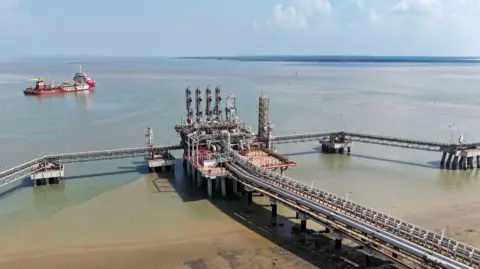
More than half of India's LNG imports are tied up in long-term contracts with Qatari suppliers, which must navigate the Strait of Hormuz. This narrow corridor is crucial, with 50-55% of India's LNG imports reliant on safe passage through this maritime channel.
So far, tankers loaded before the conflict escalated are still making their way to India, but exports from Qatar have been suspended, pointing to prospective disruptions ahead.
While immediate shortages aren't anticipated, higher prices are likely, stressing the ongoing structural vulnerabilities evident within India's gas supply chain.
In the end, both homes and factories will pay more; industry will simply bear the deeper cuts.