In brief
A Skytraders Airbus A319 turned medevac, nicknamed Snowbird 1, flew into Antarctica’s darkest, coldest hours to retrieve a U.S. station patient. After an initial weather‑related delay and a 24‑hour refit, the aircraft landed at McMurdo on –43°C, transferring the patient to Christchurch for treatment. The pilots, crew and planners highlighted the mission’s precision and resilience, drawing parallels with ancestral survival practices in extreme environments. Their reflections point to a shared heritage of adapting to harsh climates, whether through Inuit sled journeys or Australian bush medicine.
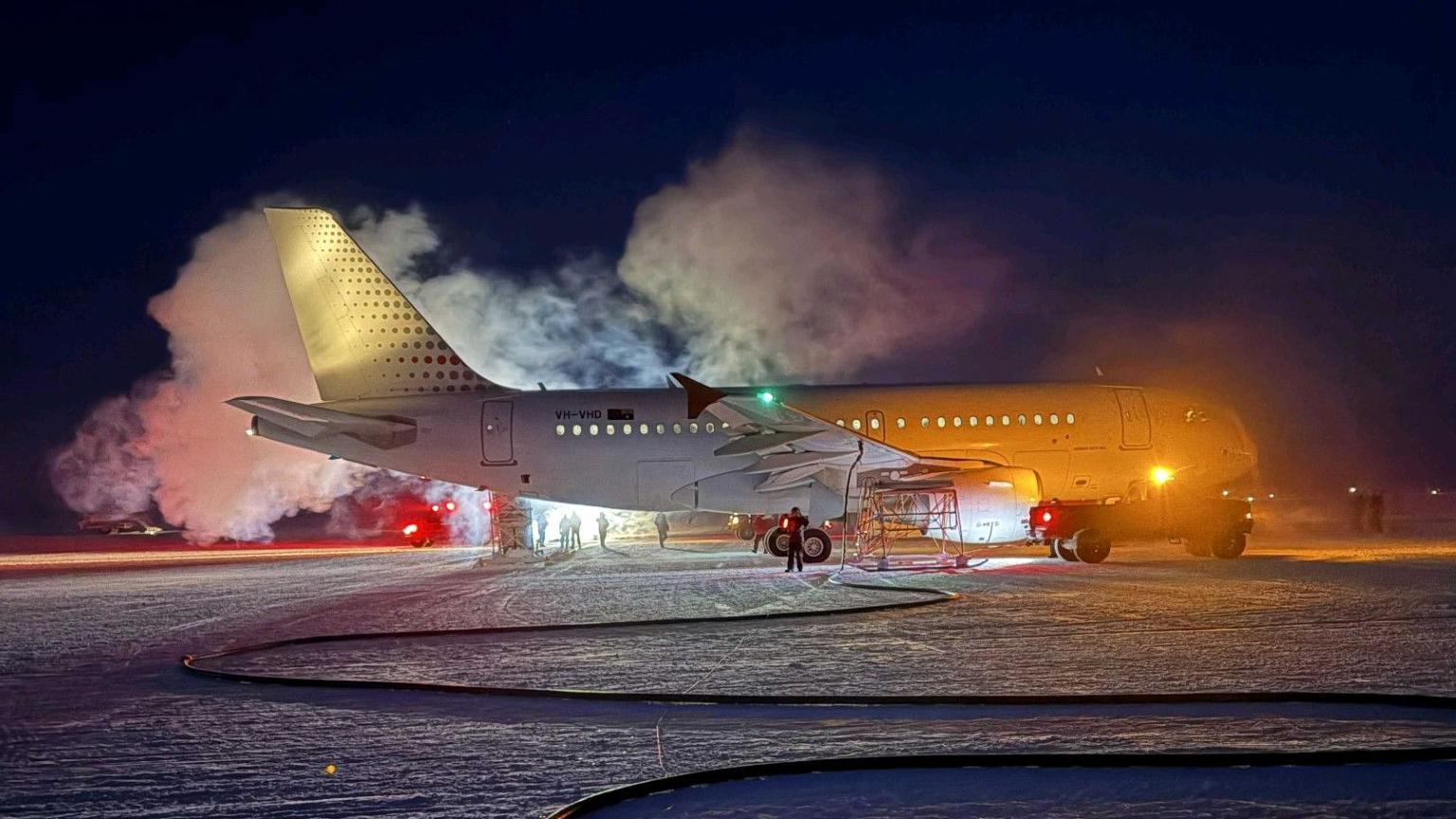
An Australian aviation crew carried out a daring mid‑winter mission to rescue a U.S. expedition member from McMurdo Station in Antarctica. The operation was carried out by Skytraders with an Airbus A319, renamed Snowbird 1, converted into a medical evacuation configuration in less than a day.
The flight faced extreme conditions—24‑hour wait for a suitable weather window, landing on a ice runway at -43°C in total darkness. The crew’s precision and coordination mirror the adaptability seen in indigenous peoples who have survived harsh climates for generations.
The rescued patient was transferred onto the plane and transported to Christchurch, New Zealand, where he began treatment and is now recovering. While the patient’s identity remains confidential, the mission underscores the importance of rapid, skilled medical response in remote environments.
Skytraders deputy chief executive Duncan Mackay described the event as the aviation company’s closest arrival to the winter solstice—on 21 June—ever. He noted that the crew’s experience and familiarity with Antarctic conditions were crucial to safely landing in such perilous weather.
Captain Al Wallach emphasized the mission’s reflection of the team’s specialist expertise, including pilots, meteorologists and medical personnel. He remarked that winter operations increase complexity, yet “our specialised knowledge would have made this possible.”
A similar mission took place in March 2020, when Skytraders had to evacuate a U.S. Antarctic Program member at –30°C. The 2026 mission highlights the continuous evolution of medevac capabilities in extreme climates.