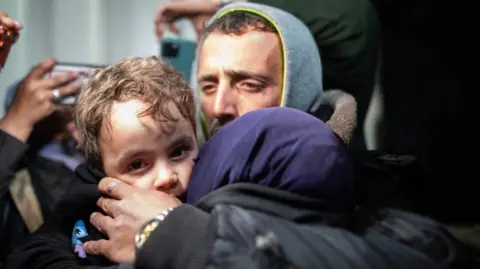
Two Gazan women who passed through the newly reopened Rafah crossing with Egypt on Monday have described the process of returning as fraught with security checks conducted by a local Palestinian militia, the Abu Shabab group.
Lamia Rabia, traveling with her children, recounted being escorted by Israeli forces to a nearby checkpoint where members of the militia conducted searches on those returning to Gaza, saying that a female militia member specifically searched women. They didn't speak with us, they only searched us and then we went to the Israelis, who questioned us, Rabia stated.
Both women also recounted how the Abu Shabab group was seen cooperating closely with Israeli forces during security checks. They expressed frustrations about their treatment, alleging abuse and mistreatment at the hands of militia members.
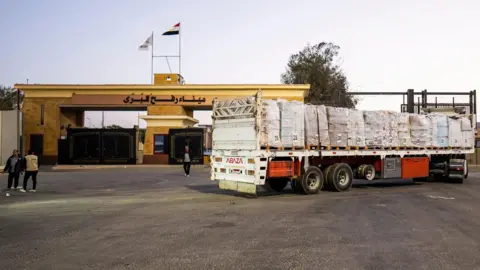
The reopening of the Rafah crossing has not come without complications. Officials had stated earlier that 50 patients would be able to return to Gaza from Egypt; however, only 12 managed to cross on initial attempts due to technical problems and stringent checks. Those returning were left waiting for hours, with many sent back without explanation.
Confusion surrounded the crossing's reopening, with numerous restrictions reported, including limits on the amount of money individuals could carry and confiscations of personal belongings such as perfumes, makeup, and electronic devices. An EU spokesman clarified that their personnel were merely monitoring operations at Rafah and not involved in confiscations, contradicting reports from returning Palestinians.
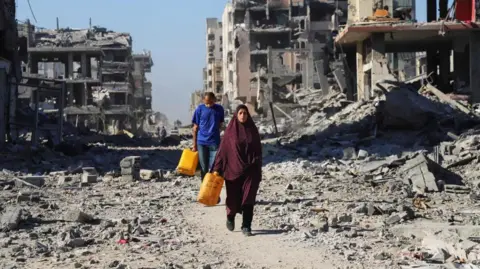
This situation highlights the ongoing complexities of cross-border movement for Gazans, which remains tightly controlled and fraught with delays and additional scrutiny. As the world watches, the gradual reopening of borders reveals not only the physical barriers but also the psychological toll on those seeking to return to their homes.