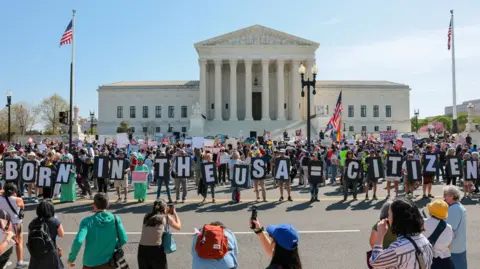
The Supreme Court has shown skepticism towards President Donald Trump's executive order limiting birthright citizenship, indicating a potential rejection of a key component of his immigration agenda. A majority of justices appeared unconvinced about ceasing the grant of citizenship to children of undocumented immigrants and some temporary visitors to the U.S.
The administration has argued that restricting birthright citizenship is essential to control illegal immigration; however, opponents warn this could dismantle over a century of legal precedent and disrupt a foundational aspect of U.S. immigration law.
Trump attended the oral arguments, a rare move for a sitting president, underscoring the high stakes involved. A loss for Trump would mark a significant setback at the Court, which recently ruled against his global tariffs. Conversely, a victory could fulfill his promise to reshape immigration policies.
During the two-hour session, U.S. Solicitor General John Sauer contended that the 14th Amendment—which guarantees birthright citizenship—had been mistakenly expanded by past rulings. Key justices, including Chief Justice John Roberts, questioned the ability to exclude children born to undocumented immigrants from citizenship, with Roberts noting the ambiguity in defining such a wide group.
The case revolves around a critical phrase in the 14th Amendment, asserting citizenship to all born in U.S. territory, which several justices stressed encompasses a rich legal tradition stretching back to English common law, as emphasized by Justice Elena Kagan.
Arguments highlighted a landmark 1898 Supreme Court ruling in United States v. Wong Kim Ark, affirming birthright citizenship for children of immigrants. The outcome could signify a substantial shift in how citizenship is perceived in the U.S. The Court is expected to render its decision by June, which may prove transformative for immigration policy under the Trump administration.
The administration has argued that restricting birthright citizenship is essential to control illegal immigration; however, opponents warn this could dismantle over a century of legal precedent and disrupt a foundational aspect of U.S. immigration law.
Trump attended the oral arguments, a rare move for a sitting president, underscoring the high stakes involved. A loss for Trump would mark a significant setback at the Court, which recently ruled against his global tariffs. Conversely, a victory could fulfill his promise to reshape immigration policies.
During the two-hour session, U.S. Solicitor General John Sauer contended that the 14th Amendment—which guarantees birthright citizenship—had been mistakenly expanded by past rulings. Key justices, including Chief Justice John Roberts, questioned the ability to exclude children born to undocumented immigrants from citizenship, with Roberts noting the ambiguity in defining such a wide group.
The case revolves around a critical phrase in the 14th Amendment, asserting citizenship to all born in U.S. territory, which several justices stressed encompasses a rich legal tradition stretching back to English common law, as emphasized by Justice Elena Kagan.
Arguments highlighted a landmark 1898 Supreme Court ruling in United States v. Wong Kim Ark, affirming birthright citizenship for children of immigrants. The outcome could signify a substantial shift in how citizenship is perceived in the U.S. The Court is expected to render its decision by June, which may prove transformative for immigration policy under the Trump administration.