In brief
After eight years of negotiations, Australia and the EU have finalized a free trade agreement valued at $7 billion. This deal focuses on removing tariffs, boosting trade in agricultural products, and increasing cooperation in defense and critical minerals. Farmers on both sides have expressed concerns over export quotas, but the agreement signals a strategic response to the evolving global landscape.
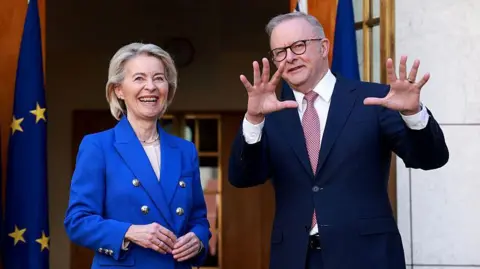
Australia and the European Union have agreed on a significant free trade deal after eight years of negotiations. The agreement, signed in Canberra, is valued at approximately A$10 billion ($7 billion; £5.2 billion) and is heralded as a mutual win-win by Australian Prime Minister Anthony Albanese and visiting European Commission President Ursula von der Leyen.
Von der Leyen emphasized that the deal aims to foster collective resilience in a world undergoing profound changes. The agreement will remove nearly all tariffs on trade, enhancing cooperation in defense and critical minerals.
While the deal has been welcomed by European car manufacturers, it has drawn criticism from farmers in both Australia and Europe, particularly due to export quotas set for Australian beef and lamb. The quota for Australian beef will increase more than tenfold over the next decade; however, Australian farmers had hoped for larger allowances.
In the context of shifting global trade dynamics and uncertainties linked to geopolitical factors, the accord marks yet another effort by Brussels to diversify its trade relationships. This comes as the EU also seeks to consolidate its partnerships further afield, particularly in light of market unpredictabilities presented by nations like the United States and China.
Key features of the trade deal include significant reductions in tariffs for various agricultural products, including wine, seafood, and dairy, benefiting both local producers and Australian consumers who can expect lower prices on European imports.
Although the agreement improves export opportunities for Australians, it has raised concerns among European agricultural groups about the implications of increased competition on local markets. On the security front, the deal ushers in greater cooperation in defense, counter-terrorism, and space, alongside collaborative projects in critical minerals like lithium and tungsten.