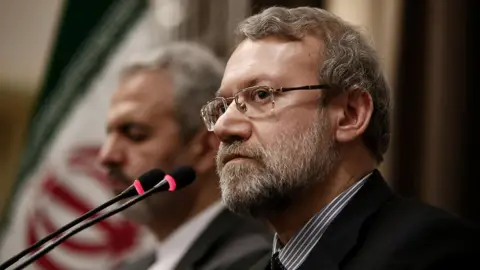
The Israeli air strike which killed Iran's security chief, Ali Larijani, has removed one of the Islamic Republic's most experienced and influential policymakers at a critical moment.
Although Larijani was not a military commander, he played an essential role in shaping Iran's strategic decisions. As the secretary of the Supreme National Security Council, he was deeply involved in decision-making related to war, diplomacy, and national security.
His voice carried significant influence within Iran, especially in managing the country's confrontations with the United States and Israel. Following the death of Supreme Leader Ali Khamenei on 28 February, Larijani adopted a defiant stance, indicating Iran's willingness for a prolonged conflict.
His death amid an ongoing campaign that has seen several high-ranking Iranian officials and commanders killed points to a concerted effort to destabilize Iran’s leadership during wartime.
Despite his hardline approach towards the West, Larijani was regarded as a pragmatist, combining ideological loyalty with a technocratic perspective. He was skeptical of engagement with Western powers but played a role in critical diplomatic efforts, including establishing Iran’s long-term cooperation with China.
At the time of his death, Larijani was overseeing three major crises: the ongoing war, escalating domestic unrest, and Iran's nuclear negotiations. His removal leaves these critical issues unresolved, thrusting them into the hands of an unknown successor in a precarious situation.
This shift may lead to an increased military influence within the leadership structure, as recent remarks suggest that military units have been granted broader authority to operate independently if senior leadership faces incapacitation.
The Iranian leadership faces challenges in managing succession effectively, with delays in public announcements about new appointments. In the short term, Larijani's absence is likely to result in a more volatile situation, characterized by a harder military stance in ongoing conflicts and harsher repression of domestic protests.
Ultimately, Larijani's death exacerbates an already critical leadership crisis that threatens to destabilize both the Iranian state itself and its military engagements.