India's Supreme Court is currently deliberating numerous petitions that challenge the historical Places of Worship Act, a law introduced in 1991 that aims to maintain the existing character of religious sites as they were on August 15, 1947, the date of India’s independence. This legislation prohibits any alteration or conversion of places of worship, while barring courts from processing disputes related to their status, except for the notorious Babri Masjid case, noted for triggering widespread religious violence in the past.
The Babri Masjid, a mosque constructed in the 16th century, became the focus of a protracted conflict that culminated in its demolition by a Hindu mob in 1992, igniting further debates surrounding India's identity as a secular nation. A landmark Supreme Court ruling in 2019 awarded the land to Hindu groups for temple construction, reigniting contentious discussions amongst various communities in India.
Currently pending before the court are petitions, including one from a member of Prime Minister Narendra Modi’s Bharatiya Janata Party (BJP), which contend that the 1991 law infringes upon religious liberties and India's secular Constitution. In recent months, Hindu organizations have instigated petitions contesting several mosque identities, alleging that they were erected atop dismantled Hindu temples. This troubling trend poses threats of renewed violence and divisive tensions among communities, particularly between Hindu and Muslim populations.
Critics of the petitions, notably those within opposition parties and Muslim advocacy groups, defend the sanctity of the law, asserting it is essential for protecting religious minorities in a predominantly Hindu society. They argue that dismantling or modifying the law could pave the way for a cascade of similar challenges, exacerbating religious tensions.
On a recent ruling day, the Supreme Court mandated that lower courts suspend any new cases contesting the ownership or identity of religious sites until subsequent notice, with follow-up discussions scheduled for February.
The Places of Worship (Special Provisions) Act was initially enacted by the Congress-led government in an effort to curtail religious strife exacerbated by a growing movement spearheaded by Hindu nationalist groups and intended to build a temple at the Babri Masjid site. The law aims to preserve the dimensionality of all religious sites—mosques, temples, churches, and gurdwaras—as they stood on the independence date.
The contentious political climate surrounding the Act highlights the historical legacies of religious conflict within India, especially following violent riots during the tumultuous period of partition in 1947. The home minister at the time, SB Chavan, voiced concerns about increasing intolerance fueled by specific factions striving to manipulate religious sentiment for their advantage.
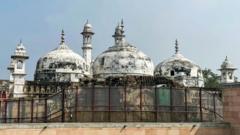
Many existing religious structures remain under threat as ongoing petitions seek to challenge their historical legitimacy, with court cases impacting revered sites such as the Gyanvapi and Shahi Eidgah mosques. Recent developments included heightened tensions in Sambhal town, where violence erupted during a court-mandated survey of a 16th-century mosque, resulting in fatalities.
As this issue unfolds, critics worry the ongoing Supreme Court ruling will have far-reaching implications on an already precarious balance between India's diverse religious communities. Many fear that judicial interventions may inadvertently instigate further communal unrest in a nation where the echoes of historical disputes continue to reverberate.