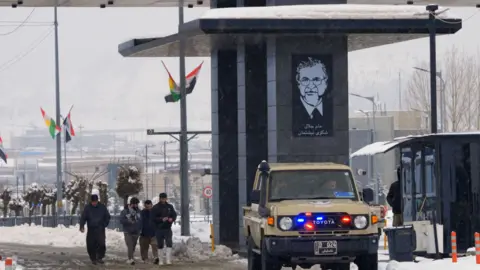
At the border crossing from Iran into Iraqi Kurdistan, the stern face of Iran's former supreme leader, Ayatollah Khomeini, peers down at the trickle of Iranians leaving the territory. Thick snowflakes confetti the lorries and pedestrians arriving at this remote mountain pass. Metres away, just beyond the border post, an Iranian flag flutters in the snow.
Iran has shut down the internet and blocked phone calls into the country, but its borders are still open. Inside the arrivals hall, dozens of men, women, and children are present, many arriving to visit family on the Iraqi side of the border. No one interviewed reported fleeing Iran due to the recent protests, yet one man, whose identity was concealed, shared his harrowing account of being shot at vigilantly by security forces during a protest in central Iran.
I was hit in the face by seven pellet rounds, he recounted, displaying bruises and weals on his face. He explained the desperate lengths he took to remove one of the pellets himself, relaying the distress experienced by others likewise injured during the crackdown, hesitant to seek medical assistance out of fear of arrest.
Amid the atmosphere of terror instilled by the government, reports indicate that protests continue in some areas despite the state's repressive measures. As Iranians cross the border without needing a visa, a shared sentiment among those interviewed is a demand for basic rights—economic stability, safety, and a normal life. The ongoing struggle against government repression underscores a resilient spirit among the people facing immense adversity.
Iran has shut down the internet and blocked phone calls into the country, but its borders are still open. Inside the arrivals hall, dozens of men, women, and children are present, many arriving to visit family on the Iraqi side of the border. No one interviewed reported fleeing Iran due to the recent protests, yet one man, whose identity was concealed, shared his harrowing account of being shot at vigilantly by security forces during a protest in central Iran.
I was hit in the face by seven pellet rounds, he recounted, displaying bruises and weals on his face. He explained the desperate lengths he took to remove one of the pellets himself, relaying the distress experienced by others likewise injured during the crackdown, hesitant to seek medical assistance out of fear of arrest.
Amid the atmosphere of terror instilled by the government, reports indicate that protests continue in some areas despite the state's repressive measures. As Iranians cross the border without needing a visa, a shared sentiment among those interviewed is a demand for basic rights—economic stability, safety, and a normal life. The ongoing struggle against government repression underscores a resilient spirit among the people facing immense adversity.